
Introduction
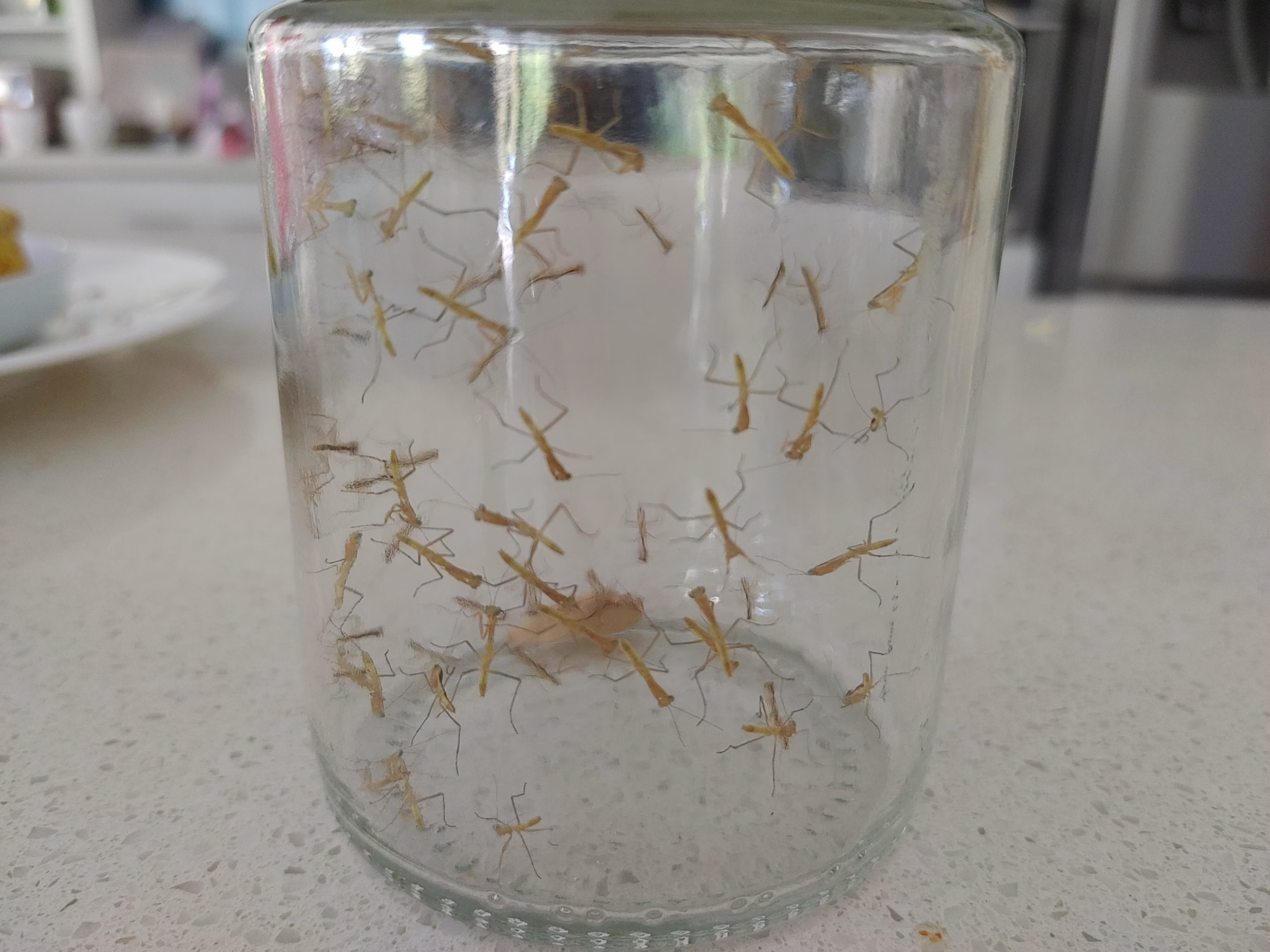
Seeing one tiny praying mantis inside can be charming. Finding dozens—or possibly hundreds—of them spreading across a window, plant, shelf, or classroom is a very different experience.
This usually happens because a praying mantis egg case was brought into a warm building. The egg case, called an ootheca, may have been attached to a branch, wreath, garden decoration, firewood, potted plant, outdoor furniture, or another object moved indoors. Once exposed to sustained warmth, the developing mantises may emerge earlier than they would have outside.
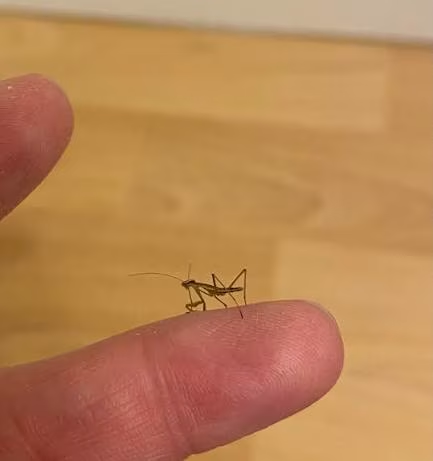
The hatchlings are called nymphs. They resemble miniature, wingless adults and are active predators almost from the beginning of their lives. They are also delicate, prone to dehydration, and likely to eat one another when crowded.
The right response depends on four questions:
- Where did the egg case come from?
- Can the mantis species be identified?
- Are outdoor conditions suitable?
- Are you planning a brief rescue or long-term captive care?
University extension resources warn that indoor warmth can cause an ootheca to hatch during winter, producing dozens or hundreds of nymphs at a time. They also note that the young may remain together briefly but soon begin preying on one another.
Quick Answer
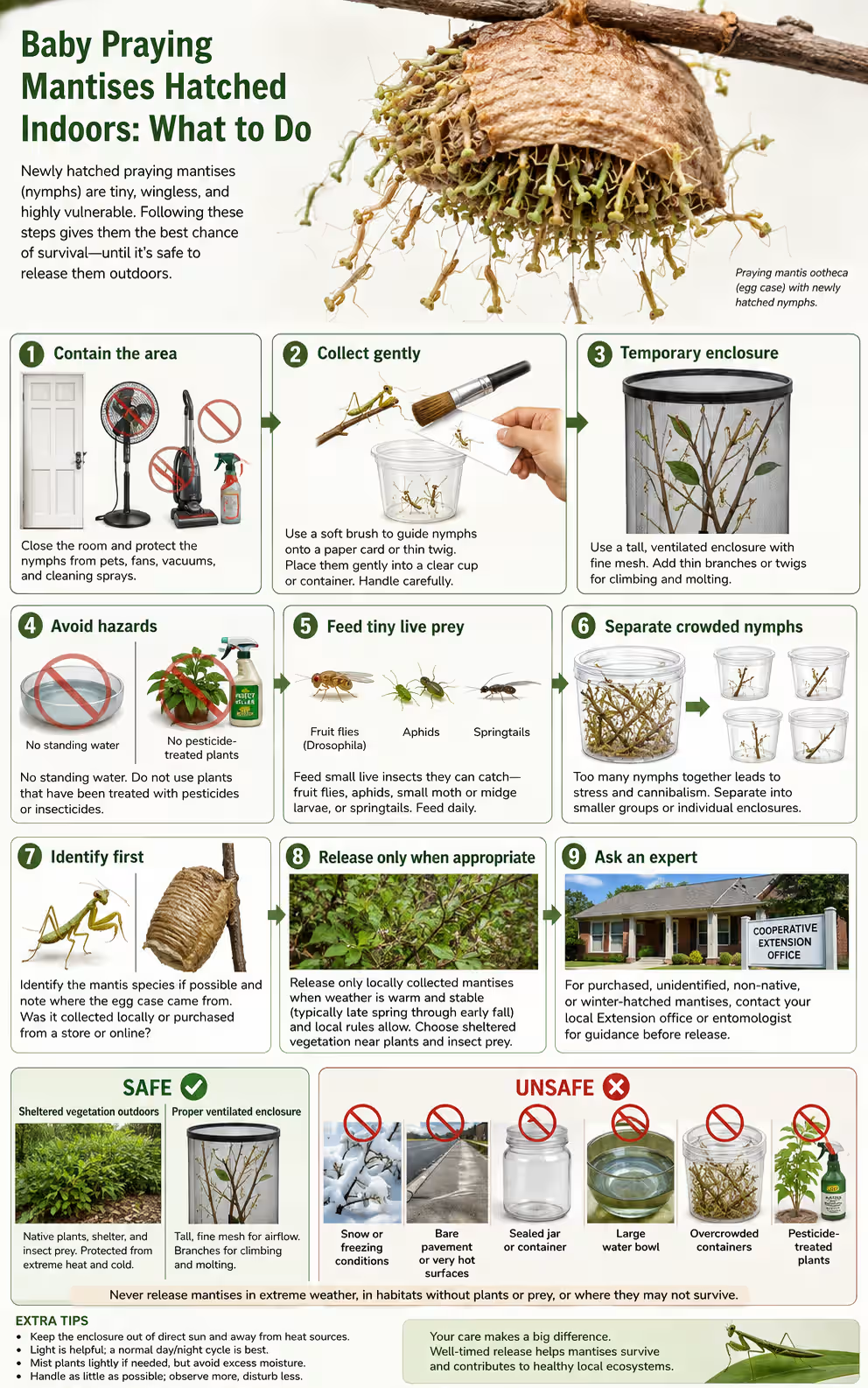
If baby praying mantises have hatched indoors:
- Close nearby doors and windows so they remain in one room.
- Keep pets, fans, vacuums, sprays, and cleaning chemicals away.
- Collect the nymphs gently with a soft brush, paper card, or ventilated container.
- Place them in a tall, escape-proof enclosure with very fine ventilation and several thin twigs.
- Do not leave a large group crowded together for long.
- Determine where the egg case came from and, if possible, identify the species.
- Release them only when they came from the local outdoor environment, outdoor conditions are suitable, and local rules do not prohibit release.
- If immediate release is inappropriate, provide tiny live prey or contact an extension office, entomologist, wildlife agency, or experienced invertebrate keeper.
Newly emerged mantises can begin feeding quickly, and sources describe fruit flies and other tiny insects as suitable prey. Crowding increases encounters between nymphs and makes cannibalism more likely.
Why Are Baby Praying Mantises Appearing Indoors?
An indoor hatch rarely means that adult mantises have established a hidden colony inside the walls. The more common explanation is that an ootheca entered the building unnoticed.
Female mantises produce a foamy material around their eggs. The material hardens into a protective case that helps shield the eggs from weather and other environmental hazards. In temperate climates, many mantis species spend winter in this egg stage and hatch when seasonal conditions become favorable.
Common objects that may carry an ootheca indoors include:
- Cut branches
- Holiday wreaths
- Dried floral arrangements
- Firewood
- Potted plants
- Garden stakes
- Patio furniture
- Children’s nature collections
- Classroom insect projects
- Purchased mantis egg cases
- Shrubs or stems brought indoors for decoration
An ootheca that would normally remain cold outside may experience weeks of springlike warmth inside a house. Depending on species and previous temperature exposure, that change can accelerate development or trigger emergence.
Iowa State University Extension specifically advises against keeping an outdoor mantis egg case in a heated room during winter because it may hatch when outdoor release is difficult.
For a closer look at what the case looks like and how hatching occurs, see the guide to the praying mantis egg case.
First Steps After an Indoor Hatch
Keep the Nymphs in One Area
Close the room rather than chasing each mantis through the building. Place a towel along the bottom of the door if the gap is large.
Turn off:
- Ceiling fans
- Portable fans
- Air purifiers with exposed intake openings
- Robotic vacuums
- Strong exhaust systems near the hatch site
Move cats, dogs, birds, reptiles, and other pets out of the room. Even a curious pet can kill many nymphs quickly.
Do not use insecticide, household cleaner, air freshener, or pesticide-treated plant material near the mantises.
Look for the Ootheca
Finding the empty or partly opened egg case helps explain the event and may help with identification.
Check:
- The original branch or plant
- Undersides of wreaths and decorations
- Window frames
- Plant stems
- Wood piles
- Storage boxes
- Mesh enclosure walls
- Furniture moved from outdoors
Do not assume every nymph has already emerged. Some may still be leaving the case, hanging beneath it, or resting nearby while their bodies firm.
Prepare a Temporary Container
A temporary enclosure should be:
- Tall enough for climbing and hanging
- Well ventilated
- Escape-proof
- Free of sticky residue
- Free of standing water
- Easy to inspect
- Equipped with thin twigs or stems
Ordinary window screening may be too coarse for newly hatched nymphs. Very fine mesh, breathable insect fabric, or a securely fitted ventilated lid is more reliable.
Avoid a smooth, shallow food-storage tub with no climbing structure. Mantises molt while hanging, so vertical space and secure footholds become increasingly important as they grow. Colorado State University Extension recommends providing sticks or similar structures that allow developing nymphs to hang during a molt.
How to Collect Baby Mantises Safely
Newly hatched mantises can be injured by fingers, forceps, stiff brushes, adhesive tape, or a powerful vacuum.
Use one of these methods instead.
Soft-Brush Method
Place the opening of a container close to the nymph. Gently encourage it to step onto a clean, soft artist’s brush, then move the brush into the container.
Do not sweep the mantis rapidly. Let it climb.
Paper-Card Method
Position a small card or piece of firm paper in front of the mantis. Use another card or a soft brush behind it to encourage forward movement.
This works well on walls, windows, and flat surfaces.
Twig Method
Offer a thin twig, wooden skewer, or untreated plant stem. Many nymphs will climb onto it naturally. Move the twig into the enclosure without shaking it.
Container-Over-Insect Method
For a nymph on a flat wall or window, place a clear cup over it and slide a thin card underneath. Turn the cup upright while keeping the card in place.
What Not to Do
Do not:
- Grab the abdomen
- Pull a mantis from a surface by one leg
- Use sticky traps
- Shake a branch violently
- Spray the nymphs with a strong stream of water
- Use a household vacuum unless mortality is unavoidable and local authorities have directed disposal
Newly hatched mantises may temporarily hang by fine threads or gather around the opening of the ootheca. Give them time to move before manipulating the egg case.
Should You Release Baby Praying Mantises Outside?
Sometimes release is the most practical outcome. Sometimes it is inappropriate.
Use the following decision process.
Release May Be Reasonable When:
- The ootheca was naturally attached to a plant or object collected from your own local property.
- You are returning the nymphs to the same general place rather than transporting them elsewhere.
- The species is native or already naturally established there.
- Temperatures are safely above freezing.
- Sheltered vegetation and small prey are present.
- No local regulation prohibits release.
- The nymphs have not been shipped from another state, province, country, or ecological region.
Kansas State University guidance recommends releasing emerged nymphs promptly when temperatures are above freezing. It also warns that nymphs that are neither released nor fed may consume one another.
However, “above freezing” should be treated as a minimum practical threshold, not a universal guarantee. A single mild afternoon followed by a hard freeze may still leave delicate nymphs with little shelter or prey. Consider the next several days of weather, not only the current temperature.
Do Not Automatically Release Them When:
- The ootheca was purchased online.
- The mantises were imported or shipped from another region.
- You do not know where the egg case originated.
- The species may be non-native or invasive.
- Local winter conditions remain severe.
- No suitable prey or vegetation is available.
- The mantises have been raised in captivity for an extended period.
- Your region regulates possession, transport, or release of invertebrates.
North American mantis communities can include both native and introduced species. Extension and conservation sources note that Chinese and European mantises were introduced to parts of North America and that large non-native mantises may compete with or prey on native insects.
The safest rule is:
Return locally collected wildlife locally when conditions are appropriate, but do not release purchased, transported, imported, or unidentified mantises without regional guidance.
Where to Release Local Nymphs
When release is appropriate, choose sheltered vegetation close to the original collection site.
Suitable locations may include:
- Dense grasses
- Shrubs
- Herbaceous garden plants
- Meadow vegetation
- Branching stems
- Areas protected from heavy foot traffic
- Vegetation away from pesticide applications
Distribute the nymphs among several plants rather than depositing all of them on one leaf. Natural dispersal reduces crowding and gives each mantis a better chance of finding small prey.
Do not place them directly on bare soil, pavement, snow, an exposed wall, or a pesticide-treated plant.
What If It Is Too Cold Outside?
An early winter hatch is the hardest situation because the nymphs are active while the outdoor ecosystem may offer little food or shelter.
You have three realistic options.
1. Seek Local Expert Guidance
Contact:
- A county or regional extension office
- A university insect diagnostic laboratory
- A natural history museum
- A state or provincial wildlife agency
- An agriculture department
- An invasive-species program
- A qualified entomologist
Send clear photographs of:
- The ootheca from several angles
- One or more nymphs
- The object on which the case was found
- Any remaining adults photographed in the previous season
Include your location and explain whether the case was found locally or purchased.
2. Maintain a Small Number Temporarily
Keeping hundreds of nymphs alive is labor-intensive and usually unrealistic. A more manageable approach is to retain a limited number in separate or low-density enclosures while seeking advice.
The remaining nymphs still require an appropriate, humane plan. Do not release an uncertain species merely because captivity is inconvenient.
3. Follow Agency Advice for a Non-Native or Unreleasable Species
If a local authority determines that the mantises should not be released, follow its recommendations. Disposal guidance can vary by jurisdiction and species, so avoid presenting a single method as universally required.
This is particularly important when an egg case arrived through commercial shipping or international transport.
Can Baby Mantises Stay Together?
Only briefly.
Immediately after emerging, many nymphs may cluster around the ootheca or move through the same small area. This does not mean they are social insects.
Mantises are predators. Newly emerged nymphs begin seeking prey, and siblings may become prey when they are confined together. Iowa State University Extension states that hatchlings may remain together for a day or two but then begin eating each other. Connecticut and Colorado resources similarly caution against confining newly hatched nymphs together.
Cannibalism becomes more likely when:
- Many mantises share a small enclosure
- Food is scarce
- Nymphs differ in size
- Individuals encounter one another frequently
- Molting mantises cannot isolate themselves
- The enclosure lacks branches and visual barriers
A large enclosure with abundant prey may reduce dangerous encounters, but it does not eliminate the basic risk.
For long-term care, separate enclosures are the most reliable option.
Temporary Enclosure Setup
A simple emergency enclosure can be made from a tall clear container.
Essential Features
Height: Provide enough vertical distance for the mantis to hang beneath a twig or mesh surface.
Ventilation: Use very fine mesh or numerous tiny ventilation holes that the nymphs cannot pass through.
Climbing surfaces: Add untreated thin twigs, dry stems, or insect-safe artificial mesh.
Clean floor: Use plain paper towel if a floor lining is needed. Replace it when soiled.
No deep water: Do not use an open water bowl.
No pesticides: Do not add flowers, branches, or leaves collected from sprayed plants.
Moderate placement: Keep the container away from direct midday sun, radiators, heating vents, and cold drafts.
Avoid Overcrowding
Do not solve the problem by putting hundreds of mantises into one small jar. A container that looks spacious to a person may still create constant encounters between tiny predators.
For a brief holding period before local release, small groups may be manageable. For longer care, separate the nymphs as soon as practical.
What Do Baby Praying Mantises Eat?
Baby praying mantises need very small, moving prey.
Appropriate food may include:
- Flightless fruit flies
- Very small flying fruit flies
- Aphids from pesticide-free plants
- Tiny gnats
- Small leafhoppers
- Springtails for the smallest species
- Pinhead crickets for sufficiently large nymphs
- Other soft-bodied insects smaller than the mantis
University of Kentucky and Colorado State University extension resources identify fruit flies and other small active insects as suitable food for young mantises.
The most important feeding rule is prey size. A feeder should be small enough for the nymph to catch and restrain without being injured.
Large, hard-bodied, or aggressive prey can stress or damage a young mantis. Uneaten crickets should not remain in an enclosure with a vulnerable or molting nymph.
Read the full mantis diet guide or the detailed explanation of what praying mantises eat before attempting longer-term care.
Foods That Are Not Adequate
Do not rely on:
- Leaves
- Grass
- Fruit
- Bread
- Sugar water
- Honey
- Raw meat
- Pet food
- Dead insects lying on the floor
- Large adult crickets
- Insects collected from pesticide-treated areas
Mantises are visual predators, and movement is an important part of their prey response. A motionless piece of food is not equivalent to appropriately sized live prey.
How Often Should They Eat?
There is no single schedule suitable for every mantis species and every developmental stage. Temperature, prey size, species, and recent feeding all matter.
For an emergency group, the more urgent concern is ensuring that suitable tiny prey are available without overcrowding the enclosure. For individually housed nymphs, observe whether the abdomen appears extremely thin, whether prey disappears, and whether uneaten feeders are disturbing the mantis.
Avoid filling the enclosure with so many insects that the mantis is constantly touched or stressed.
Do Baby Mantises Need Water?
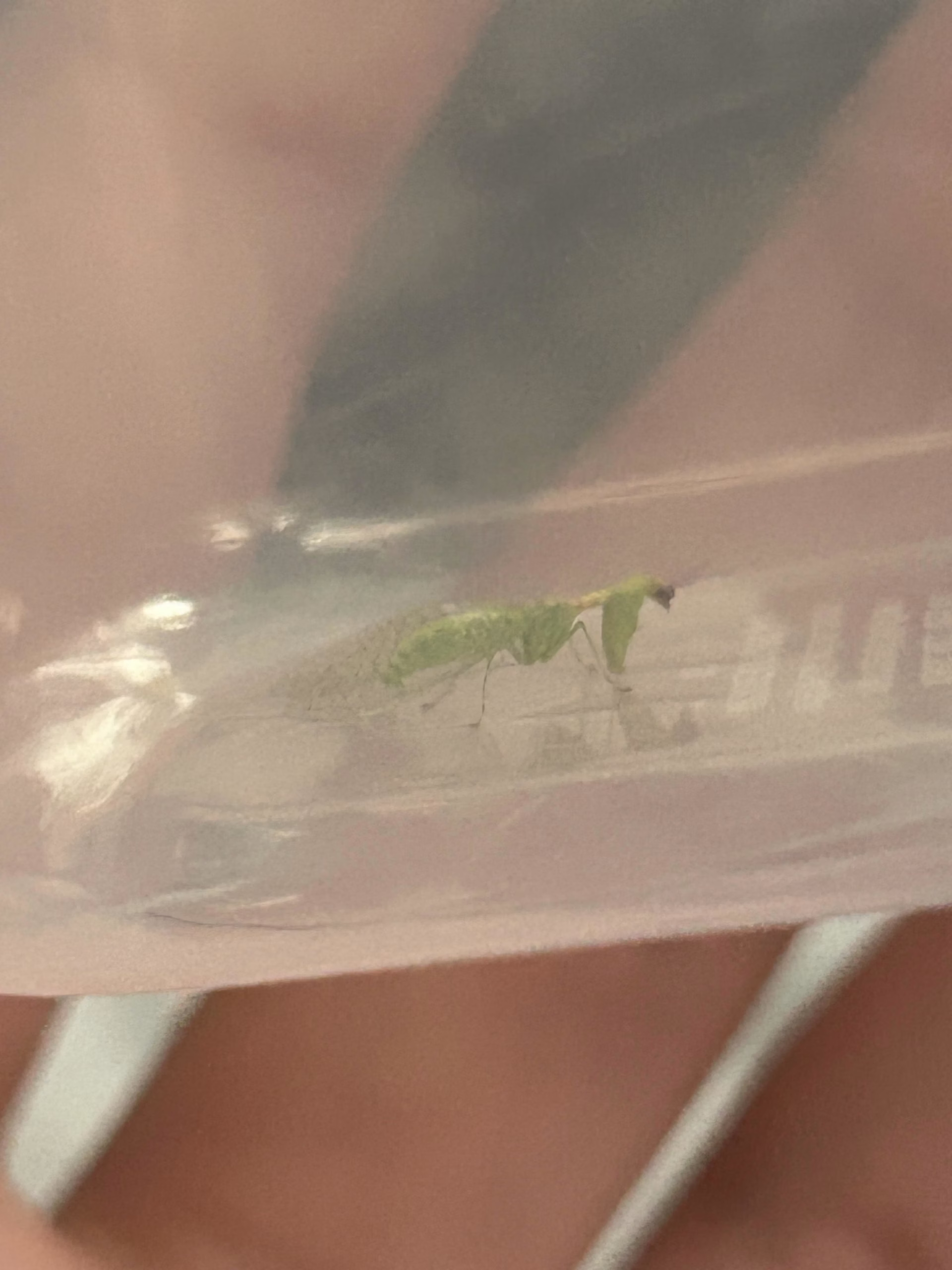
Mantises obtain part of their moisture from prey, but captive conditions can become dry.
A very light mist on part of an enclosure wall or mesh may provide droplets the mantis can drink. The goal is not to soak the enclosure.
Avoid:
- Open water dishes
- Large droplets around first-instar nymphs
- Saturated paper towel
- Condensation covering the entire enclosure
- Constantly wet, poorly ventilated conditions
A laboratory husbandry paper cautioned that very small first-instar nymphs can have difficulty escaping large water droplets because of surface tension.
Humidity needs differ substantially among species. Do not apply one fixed humidity percentage to every mantis without knowing its identity and natural habitat.
Understanding Molting
Baby mantises grow through repeated molts. A growth period between two molts is called an instar.
During a molt, the mantis usually hangs from a secure surface and gradually withdraws from its old exoskeleton. Its new body is soft and vulnerable until it expands and hardens.
Do not disturb a mantis that is:
- Hanging motionless
- Refusing food shortly before a molt
- Suspended beneath mesh or a twig
- Emerging from an old exoskeleton
- Pale and soft after shedding
Remove active feeder insects if they might bite or harass a molting mantis.
A short enclosure can cause serious problems because the mantis needs enough space below its perch to emerge fully. This is one reason vertical height matters more than floor area alone.
Nymphs resemble small wingless adults and develop through incomplete metamorphosis rather than passing through a caterpillar or pupal stage.
The complete sequence is explained in the praying mantis life cycle guide.
How to Identify a Baby Praying Mantis
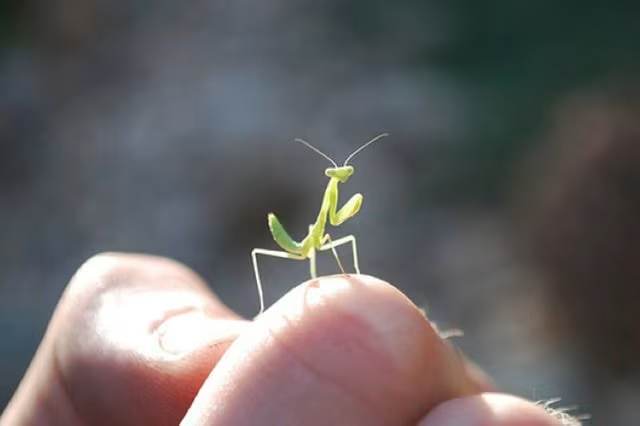
A mantis nymph usually has:
- A triangular, mobile head
- Large compound eyes
- An elongated prothorax, often described as a “neck”
- Two specialized grasping front legs
- Four walking legs
- Long antennae
- No fully developed adult wings
- A body shaped roughly like a miniature adult mantis
Young mantises may differ in color and proportion from adults. Some species also mimic ants or other insects during early life stages.
Do not identify a species from green or brown color alone. Color can vary within a species and may change after molts.
Useful identification clues include:
- Geographic location
- Shape of the ootheca
- Size of the case
- Texture and color of the case
- Facial markings
- Foreleg markings
- Body proportions
- Wing length in older individuals
- Time of year
- Habitat
The praying mantis identification guide explains the main anatomical and behavioral clues.
For regional identification, photographs of the ootheca can be more useful than photographs of newly hatched nymphs.
Native and Non-Native Mantis Concerns
Advice about release cannot be separated from geography.
A species that belongs naturally in one part of the world may be introduced somewhere else. Even within the same country, regulations and conservation concerns may differ.
In parts of North America, commonly observed mantises may include:
- Native Carolina mantises
- Native grass mantises
- Introduced Chinese mantises
- Introduced European mantises
- Introduced narrow-winged mantises
The exact mix varies by region.
Mantises are generalist predators. They do not target only insects that people consider pests. They may consume pest insects, but they also capture pollinators, butterflies, other predators, and occasionally other mantises. Extension sources therefore caution against treating mantises as precise or guaranteed biological-control agents.
Before releasing an ootheca purchased for “garden pest control,” determine:
- Which species was supplied?
- Where was it produced?
- Is that species native to your area?
- Is possession or release regulated?
- Could it affect native mantises or pollinator habitat?
For broader ecological context, see mantises in the garden and where praying mantises live.
Can Baby Praying Mantises Live on Houseplants?
A houseplant can provide a perch, but it is not a complete habitat by itself.
Most indoor plants do not contain enough suitable prey to support numerous nymphs. A plant may also expose mantises to:
- Systemic pesticides
- Insecticidal soap residues
- Neem products
- Sticky traps
- Dry heated air
- Window glass
- Household pets
- Potting-soil predators
- Sudden temperature changes
Nymphs released loosely onto houseplants may disperse through the room while searching for prey.
Use plants only as part of a controlled enclosure and only when you know they have not been treated with insecticides.
Are Baby Praying Mantises Dangerous?
Baby mantises are not a meaningful threat to people.
They do not have venom, and newly hatched nymphs are too small to cause a significant bite or pinch. Larger mantises may grasp defensively or attempt to bite when restrained, but this is generally a minor handling issue rather than a serious hazard.
The greater risks usually run in the opposite direction. Nymphs can be injured by:
- Rough handling
- Crushing
- Dehydration
- Pesticide exposure
- Pets
- Fans
- Sticky surfaces
- Inappropriate food
- Failed molts
- Crowding
Children can observe them safely with adult supervision. Encourage observation through the container rather than repeated handling.
Indoor Hatch Decision Table
| Situation | Likely concern | Recommended response |
|---|---|---|
| Local outdoor ootheca hatches during mild spring weather | Nymphs need to disperse and find prey | Return them promptly to sheltered vegetation near the collection site |
| Local ootheca hatches during freezing winter weather | Outdoor food and shelter may be unavailable | Contain temporarily and contact a local extension office |
| Purchased ootheca hatches indoors | Species and origin may be uncertain | Do not release until species and local rules are checked |
| Hundreds of nymphs are crowded in one jar | Cannibalism and stress | Increase space, distribute them appropriately, or separate individuals |
| Nymphs are wandering around the house | Dehydration, crushing, pets, and loss | Close the room and collect them with a soft brush, card, cup, or twig |
| Nymphs are not eating dead insects | Normal visual hunting response | Offer appropriately sized moving prey such as fruit flies |
| A nymph hangs motionless beneath mesh | It may be preparing to molt | Remove threatening feeders and do not disturb it |
| The ootheca is still partly hatching | More nymphs may emerge | Keep it ventilated and avoid shaking or opening the case |
| Species may be non-native | Ecological and regulatory concern | Photograph it and seek expert identification before release |
| Only one or two nymphs are being kept | Long-term husbandry is possible but specialized | Use separate tall enclosures and research species-specific care |
Preventing Another Accidental Indoor Hatch
The easiest solution is prevention.
If you find an ootheca outdoors during winter:
- Leave it attached when possible.
- Do not bring the branch into a heated living space.
- Do not use ootheca-bearing stems in indoor decorations.
- Inspect wreaths, dried plants, and firewood.
- Keep nature-study specimens at outdoor winter temperatures.
- Use a protected, unheated location if temporary relocation is necessary.
- Keep the case ventilated rather than sealed in an airtight container.
- Record exactly where it was found.
Iowa State recommends keeping a found egg case at winter temperatures in an unheated garage or porch rather than a warm indoor room. Illinois Extension advises that an ootheca removed from an unsuitable surface should be transferred to a sheltered location rather than dropped on the ground.
Do not cut, soak, refrigerate, or otherwise manipulate an unidentified ootheca without understanding the species and its seasonal requirements. Different mantises have different developmental patterns.
Classroom Observation
A mantis hatch can be an excellent educational event when it is planned responsibly.
Students can observe:
- Ootheca structure
- Incomplete metamorphosis
- Nymph anatomy
- Predator behavior
- Camouflage
- Movement tracking
- Molting
- Ecological food webs
- Native and introduced species questions
Before bringing an ootheca indoors, the teacher should have:
- A confirmed species or reliable identification plan
- A secure enclosure
- A supply of tiny live prey
- A separation strategy
- A legal and ecologically appropriate release plan
- A plan for school holidays and weekends
- Permission under relevant school and wildlife rules
The University of Kentucky describes mantis rearing as a useful classroom activity but warns that a single ootheca can yield dozens to hundreds of nymphs.
Observation should not begin with the assumption that every hatchling can be raised to adulthood. Natural mortality is high, and captive care for many separate predators demands considerable time, space, and feeder insects.
Common Mistakes
Releasing Purchased Mantises Without Identification
Commercial availability does not prove that a species is native, suitable, or legal to release where you live.
Leaving Hundreds Together
A brief cluster after hatching is normal. Long-term crowding is not.
Feeding Fruit Instead of Prey
Fruit may provide moisture in some circumstances, but it does not replace live animal prey.
Putting Them in a Sealed Jar
A sealed jar can overheat and lacks adequate airflow.
Using Large Ventilation Holes
Newly hatched nymphs can pass through surprisingly small gaps.
Adding Wild Plants From Sprayed Areas
Pesticide residue can harm both the mantises and their feeder insects.
Keeping an Open Water Dish
Tiny insects can drown in very shallow water.
Handling a Molting Mantis
A soft, emerging mantis can be permanently injured by disturbance.
Assuming Every Mantis Is a Garden Helper
Mantises consume many kinds of prey, including beneficial insects and pollinators. Their net effect is more complex than a simple “good bug” label.
When to Contact a Professional or Local Authority
Seek regional help when:
- The species cannot be identified.
- The ootheca was purchased or shipped.
- The mantises may be non-native.
- The hatch occurred during severe winter weather.
- Local wildlife-release rules are unclear.
- Hundreds of nymphs cannot be managed responsibly.
- The insects arrived in an international package.
- You suspect an unusual or newly introduced species.
- A school or institution needs a formal care and release plan.
A good first contact is usually a university extension office or insect diagnostic laboratory. Wildlife and agriculture agencies may be more appropriate when transport, importation, invasive species, or release regulations are involved.
Provide your precise region, but do not transport living specimens to an office unless staff instruct you to do so.
Frequently Asked Questions
What should I do immediately when baby praying mantises hatch indoors?
Close the room, remove pets, turn off fans and vacuums, and locate the ootheca. Collect the nymphs gently into a tall, ventilated, escape-proof container with fine mesh and thin twigs. Do not use insecticide or leave the mantises in a sealed jar. Determine the egg case’s origin before deciding whether outdoor release is appropriate.
Should I put baby praying mantises outside immediately?
Release may be appropriate when the egg case came from your local outdoor environment, the species belongs there, suitable vegetation and prey are available, and temperatures are safely above freezing. Do not automatically release purchased, imported, transported, or unidentified mantises. Check several days of weather and local wildlife guidance rather than relying on one warm afternoon.
What do newly hatched praying mantises eat?
Newly hatched mantises eat tiny live prey. Depending on their size, suitable options may include fruit flies, aphids, springtails, gnats, small leafhoppers, and other soft-bodied insects. Food must be small enough for the nymph to overpower safely. Leaves, bread, fruit, sugar water, and pieces of meat are not substitutes for suitable prey.
Do baby praying mantises eat each other?
Yes. Young mantises may prey on siblings, especially when they are crowded, hungry, or different in size. They can remain clustered briefly after hatching, but they are not social insects. Nymphs intended for longer-term captive care should generally be separated, while locally releasable nymphs should be distributed among sheltered plants rather than placed together in one spot.
How long can baby mantises remain together?
There is no exact safe duration for every species and enclosure. University extension guidance indicates that newly emerged nymphs may remain together for a day or two before cannibalism becomes a serious problem. Food, space, structure, species, and size differences all affect the risk. Separation or appropriate outdoor dispersal should not be delayed unnecessarily.
Can baby praying mantises survive inside a house?
A few may survive temporarily if they receive suitable live prey, moisture, ventilation, climbing surfaces, and room for molting. A normal house does not automatically provide these conditions. Most indoor rooms are too dry and contain too little appropriate prey, while pets, windows, fans, cleaners, and accidental crushing create additional hazards.
Can baby mantises survive cold weather?
In many temperate species, winter is normally survived inside the ootheca rather than as active nymphs. Newly hatched mantises are more vulnerable to freezing temperatures and lack of prey. If an indoor hatch occurs during severe winter weather, do not make an uninformed release. Temporarily contain them and seek advice from a local extension office or entomologist.
How many baby mantises can hatch from one egg case?
The number varies greatly by species and individual ootheca. Some cases contain dozens of eggs, while others can produce more than one hundred nymphs. University sources describe ranges extending from a few dozen to several hundred. This is why anyone bringing an ootheca indoors should prepare for a large hatch rather than expecting one or two mantises.
Do baby praying mantises need water?
They obtain moisture from prey but may also drink small droplets. Lightly misting part of an enclosure can provide water, although species-specific humidity needs differ. Avoid standing water and large droplets, especially for the smallest nymphs. Maintain ventilation and allow surfaces to dry rather than keeping the enclosure continuously wet.
Can I keep a baby praying mantis as a pet?
Keeping one or a small number is possible, but care must be matched to the species. Each mantis needs an escape-proof vertical enclosure, secure molting surfaces, appropriate temperature and humidity, and a regular supply of suitably sized live prey. Many species should be housed individually. Confirm that possession is legal and avoid releasing captive or non-native animals later.
Is it legal to release baby praying mantises?
Rules vary by country, state, province, and species. A locally occurring mantis returned near its collection point may be treated differently from a commercially purchased or imported species. Because regulations change and environmental concerns are regional, contact a wildlife, agriculture, or invasive-species authority when the origin or identity of the mantises is uncertain.
What should I do with the empty mantis egg case?
Keep it temporarily if identification is still needed, since ootheca shape can be an important species clue. Photograph it from the front, side, top, and attachment surface. Once experts have confirmed that hatching is complete and the case is no longer needed, it can usually be discarded. Do not assume a partly opened case is completely empty.
Conclusion
An indoor mantis hatch is not usually a household infestation. It is a seasonal wildlife event that happened in the wrong place or at the wrong time.
The immediate priorities are containment, ventilation, protection from household hazards, and prevention of overcrowding. After that, the egg case’s origin and the mantis species determine the safest next step.
Locally collected nymphs may be returned to sheltered outdoor vegetation when conditions are suitable. Purchased, transported, or unidentified mantises require more caution because release can create ecological or regulatory problems.
For people who decide to keep a small number, successful care requires tiny live prey, separate enclosures, safe moisture, and enough vertical space for molting. A jar of leaves is not enough.
The event also offers a close look at the behavior of praying mantises: predators that emerge ready to hunt, disperse, molt, and survive without parental care. Responding calmly—and identifying before releasing—protects both the mantises and the surrounding ecosystem.
References and Further Reading
- Iowa State University Extension and Outreach — Praying Mantis.
https://yardandgarden.extension.iastate.edu/encyclopedia/praying-mantis
Practical guidance on indoor egg-case hatching, temporary grouping, cannibalism, and outdoor release. - University of Kentucky Department of Entomology — Praying Mantids.
https://entomology.mgcafe.uky.edu/ef418
Information on rearing mantises, enclosure conditions, nymph numbers, live prey, development, and garden ecology. - Colorado State University Extension — Mantids of Colorado.
https://extension.colostate.edu/resource/mantids-of-colorado/
Guidance on separating nymphs, feeding young mantises, providing molting structures, and storing oothecae under seasonal conditions. - Wisconsin Horticulture, University of Wisconsin–Madison Division of Extension — Praying Mantids.
https://hort.extension.wisc.edu/articles/praying-mantids/
Overview of hatching, nymph development, hunting, diet, incomplete metamorphosis, and the limitations of mantises as biological control. - Kansas State University Research and Extension — Praying Mantids.
https://bookstore.ksre.ksu.edu/pubs/praying-mantids_MF3593.pdf
Practical instructions concerning nymph emergence, release above freezing, feeding, and cannibalism. - NC State Extension — Challenging the Conventional Wisdom About Praying Mantids.
https://growingsmallfarms.ces.ncsu.edu/news/challenging-the-conventional-wisdom-about-praying-mantids/
Regional discussion of native and non-native mantises, ootheca identification, nymph emergence, and pollinator-garden impacts. - Missouri Department of Conservation — Chinese Mantis.
https://mdc.mo.gov/discover-nature/field-guide/chinese-mantis
Conservation context concerning introduced mantises, generalist predation, native species, and release for pest control. - Brannoch, S. K. et al. — Manual of Praying Mantis Morphology, Nomenclature, and Practices. ZooKeys, 2017.
https://pmc.ncbi.nlm.nih.gov/articles/PMC5673847/
Scientific reference for mantis anatomy, terminology, ootheca structure, and morphological study.