
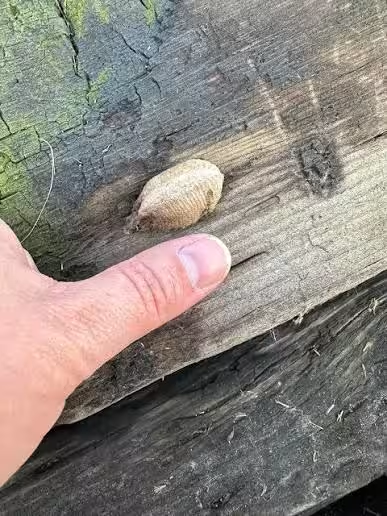
Finding a praying mantis egg case often creates an immediate dilemma. The small, hardened mass may be attached to a branch you need to prune, a plant you plan to compost, a door frame that must be painted, or an outdoor object that is about to be moved.
You may want to protect it, but relocating it carelessly can create new problems. Pulling it from a surface may damage the case. Bringing it into a heated home may trigger hatching before outdoor conditions can support the young mantises. Moving it a long distance may also transport a species beyond the place where it was found.
The safest decision depends on the condition of the egg case, its location, the season, the local climate, and—in some regions—the mantis species.
Quick Answer
Yes, you can sometimes move a praying mantis egg case, but leaving it where the female deposited it is normally safer.
When relocation is necessary, move the branch, stem, or small object to which the egg case is attached. Secure that supporting material in a sheltered outdoor location close to where it was found. Keep the case in approximately the same orientation, avoid covering any part of it, and allow it to remain under normal outdoor seasonal temperatures.
An extension expert responding to a relocation question advised that an ootheca is best left in place, although moving it may be justified when human activity is likely to damage it. The same guidance cautioned that no relocation method can guarantee that the eggs will remain unharmed.
What Is a Praying Mantis Egg Case?
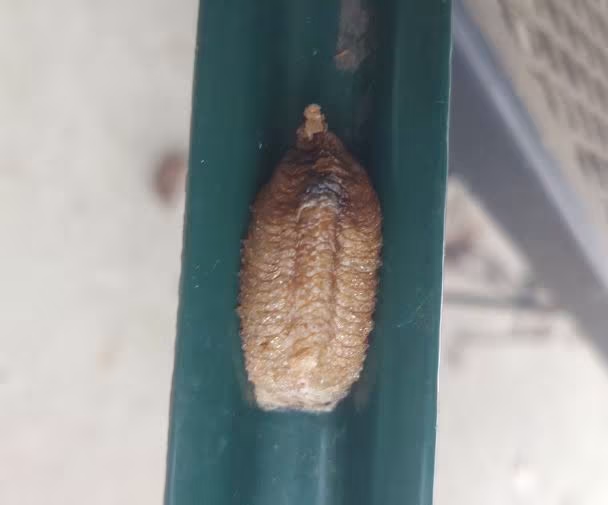
A praying mantis egg case is called an ootheca, with oothecae as the plural form.
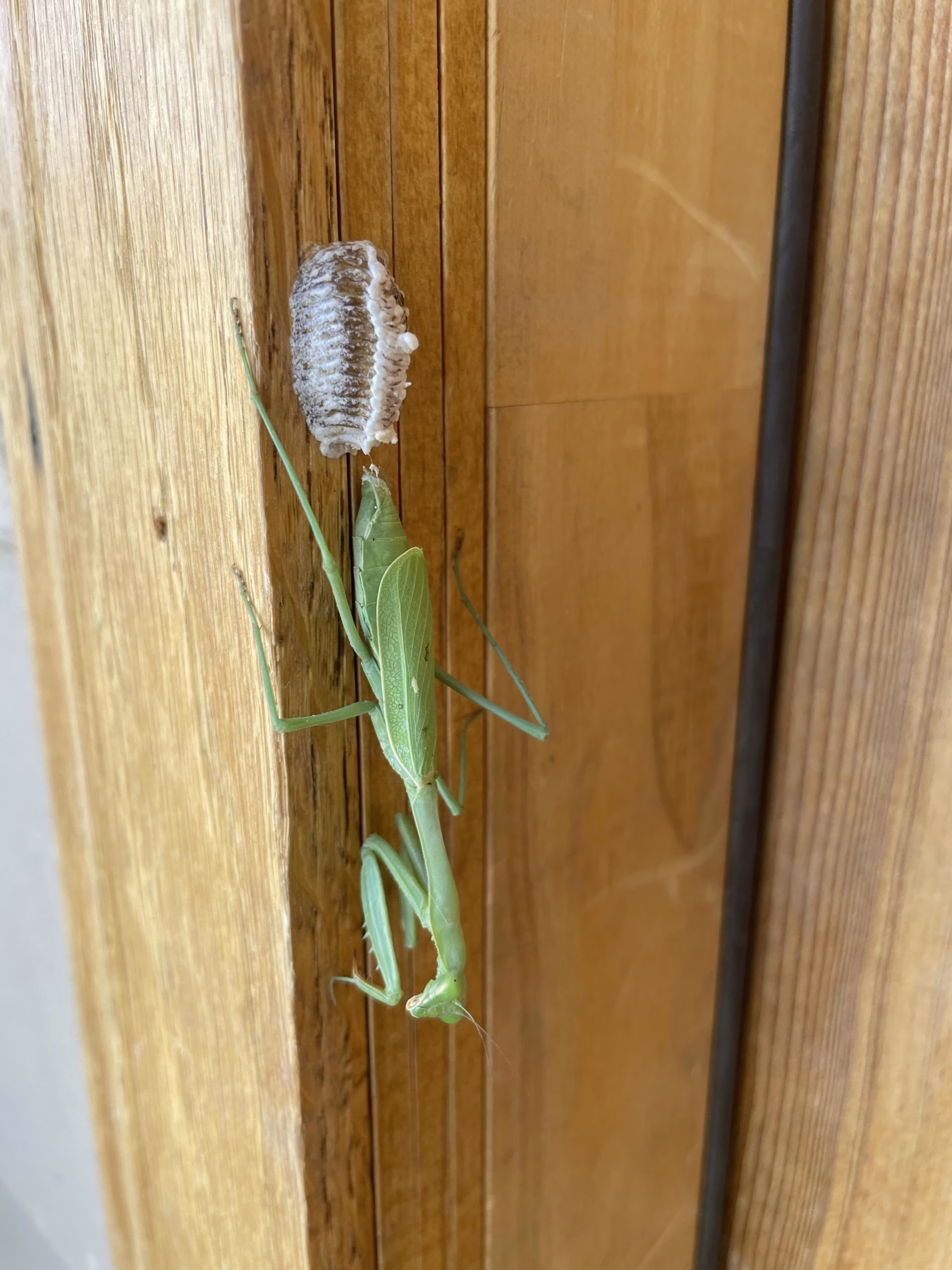
The female produces a frothy material while laying her eggs. This material surrounds and supports the eggs and then hardens into a protective case. Depending on the species, an ootheca may be rounded, elongated, ridged, flattened, layered, or wrapped partly around a twig.
An ootheca is therefore not simply a loose bundle of eggs. It is an organized biological structure that helps protect developing embryos from environmental exposure and some natural enemies. Scientific descriptions characterize mantis oothecae as complex structures formed during egg laying to support and protect the eggs.
For a closer look at egg-case formation and appearance, see this guide to the praying mantis egg case.
Should You Leave the Egg Case Where It Is?
In most circumstances, yes.
The female selected a surface that could support her body during egg laying and hold the finished case. Mantises commonly attach oothecae to twigs, woody stems, grasses, fences, walls, posts, rocks, buildings, and other firm surfaces. Placement varies by species and local habitat.
Leaving the case undisturbed avoids several preventable risks:
- Crushing or cracking the hardened material
- Separating internal eggs from their protective structure
- Blocking the area from which nymphs emerge
- Changing exposure to sun, rain, wind, and temperature
- Bringing it into an unsuitable indoor environment
- Transporting it outside its established local range
There is no need to move an ootheca merely because it looks exposed. Egg cases of temperate mantises normally remain outdoors through winter. Their hardened covering is part of the species’ natural overwintering strategy.
When Moving an Ootheca May Be Justified
Relocation may be the more protective option when leaving the case in place would probably result in its destruction.
Examples include an ootheca attached to:
- A branch that must be removed for safety
- An annual plant that will be composted
- A Christmas tree that will be taken indoors
- A door, gate, or movable machine part
- A wall that will be pressure-washed, painted, or treated
- Firewood that will be burned
- Outdoor furniture that will be stored in a heated building
- A structure scheduled for demolition or repair
- Vegetation about to receive pesticide or herbicide treatment
The decision is not “moving versus no risk.” It is a comparison between the risks of relocation and the likely consequences of leaving the case where it is.
When the original location is stable and will remain untreated, leaving it alone remains the preferred choice.
Can Moving a Mantis Egg Case Kill the Eggs?
It can.
A hardened ootheca is protective, but it is not indestructible. Bending, crushing, scraping, piercing, splitting, soaking, or coating it may damage the structure or the eggs inside.
Damage may not always be visible from the outside. An egg case can look intact after rough handling even though its internal arrangement has been disturbed. Conversely, an old, weathered-looking ootheca may still be viable.
This is why moving the supporting branch or object is safer than attempting to peel the egg case away. The goal is to preserve the ootheca and its attachment surface as a single unit.
How to Move a Praying Mantis Egg Case Safely
No technique can eliminate every risk, but the following method minimizes unnecessary disturbance.
- Confirm That It Is an Ootheca
Before moving anything, compare the object with reliable photographs of locally occurring mantis egg cases.
Moth cocoons, spider egg sacs, plant galls, dried mud, scale-insect deposits, foam, and other insect egg masses may be mistaken for mantis oothecae.
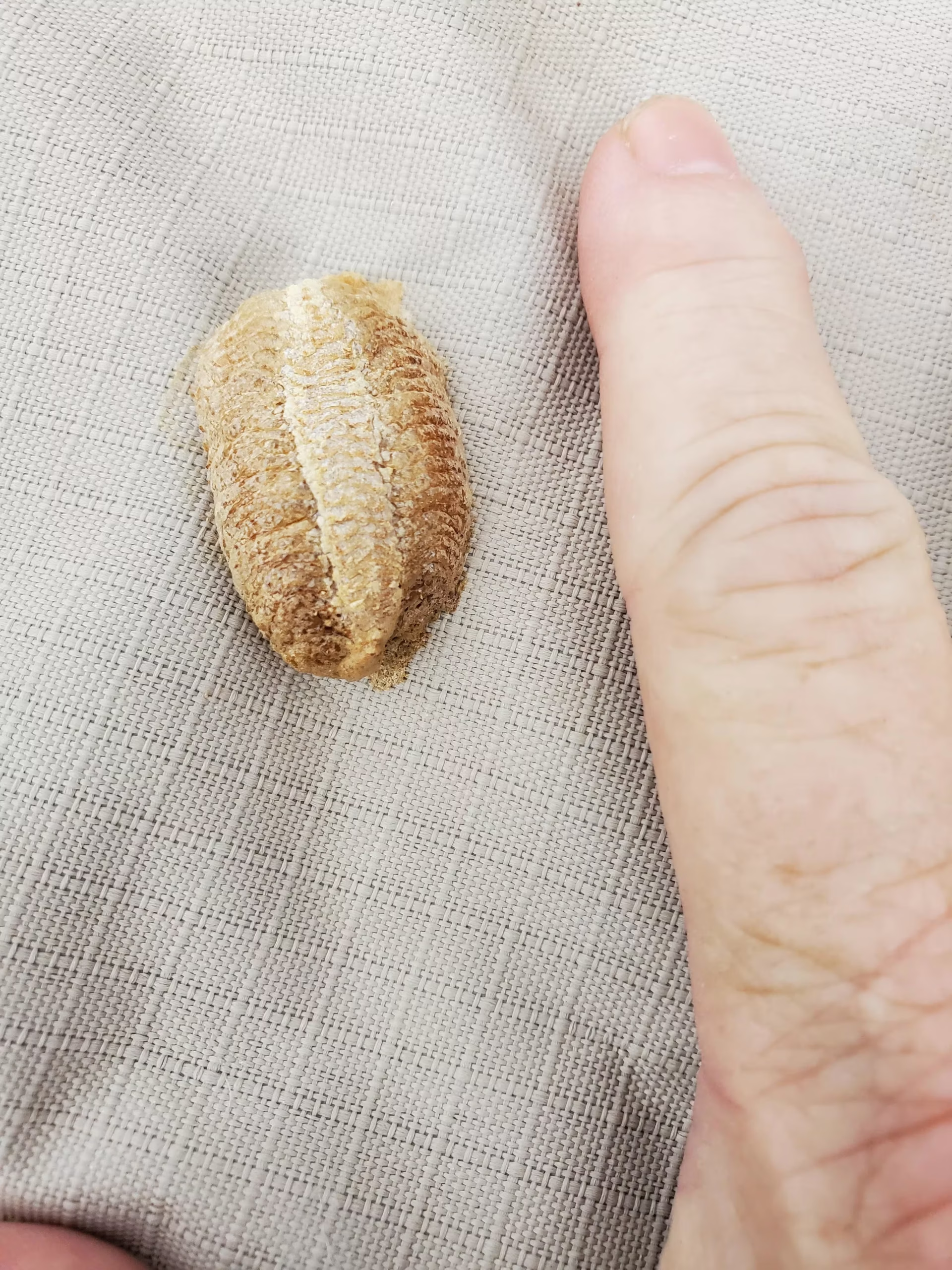
The appearance of an ootheca also varies significantly among species. A rounded tan case resembling a toasted marshmallow may belong to a different mantis from a narrow, flattened case with a pale central ridge. Regional identification resources are more useful than a single generic internet photograph.
The site’s praying mantis identification guide provides additional context for recognizing adults and egg cases.
- Photograph the Original Position
Take several clear photographs before touching the branch or object.
Record:
- Which end faces upward
- Which side faces the supporting surface
- Whether the case is horizontal, vertical, or angled
- Its approximate height above the ground
- Whether it is exposed or partly sheltered
- The type of vegetation around it
Direct experimental research on homeowner relocation is limited. Preserving the original orientation and microhabitat is therefore a cautious risk-reduction measure rather than a guarantee of successful hatching.
- Move the Supporting Material
When the ootheca is attached to a twig or stem, cut the plant material on both sides of the egg case. Leave enough length to handle and secure the stem without touching the ootheca.
Do not squeeze the case while holding the branch. Use clean pruning tools and make the cuts far enough away that vibration and pressure are minimized.
When it is attached to a small removable object, relocate the whole object when practical.
- Select a Nearby Outdoor Location
Choose a location within the same property or immediate local habitat whenever possible.
A suitable site generally has:
- Vegetation that provides structural cover
- Space beneath or around the case for emerging nymphs
- Protection from repeated human contact
- No scheduled pesticide treatment
- Normal outdoor temperature cycles
- Conditions broadly similar to the original site
Mantises occupy different habitats depending on species and region, including gardens, meadows, old fields, woodland edges, shrubs, grasses, and other vegetated areas where insect prey is available.
More information is available in where praying mantises live.
- Preserve the Original Orientation
Secure the supporting branch so that the egg case remains positioned approximately as it was before removal.
This does not require mathematical precision. The practical objective is to avoid turning it randomly, laying it loose on the ground, or pressing its exposed surfaces against another object.
Do not cover the case with tape, glue, paint, soil, cloth, or plant ties. Attach the branch, not the ootheca.
- Keep the Emergence Area Clear
Do not wedge the egg case tightly between branches or place it against a flat surface if that surface was previously exposed.
Young mantises must be able to leave the case and disperse. Depending on the species, numerous nymphs may emerge within a relatively short period. Newly hatched mantises resemble small, wingless adults and begin moving away in search of suitable cover and tiny prey.
- Secure the Branch Without Crushing It
Use a soft plant tie, natural twine, or another nonadhesive support around the branch or stem. Make sure the tie cannot slide onto the egg case.
The attachment should withstand ordinary wind without constricting the branch fragment or placing pressure on the ootheca.
- Leave It Outdoors
Once relocated, allow the egg case to experience normal local weather.
Do not repeatedly move it, handle it for photographs, or take it indoors during severe weather unless a local entomologist has provided species-specific instructions.
Moving an Ootheca Attached to a Wall or Door Frame
An egg case attached directly to masonry, wood, metal, siding, glass, or a door frame is more difficult to relocate safely.
First consider whether the work can be delayed until after the normal local hatching period. This may be safer than detaching the case.
When delay is impossible:
- Do not pull the ootheca off with your fingers.
- Do not drive a needle, screw, or staple through it.
- Do not soak it with water or solvent.
- Do not spray paint, cleaner, lubricant, or pesticide around it.
- Do not assume a scraper can pass beneath it without causing damage.
Because attachment structure varies, there is no universally safe method for removing an ootheca from a solid surface. A local extension office can provide advice based on the species, season, and surface involved.
If a small section of the supporting material can be removed without touching the case—for example, a replaceable strip of plant support—it is safer to preserve that section than to separate the ootheca itself.
What If the Egg Case Has Already Fallen Off?
An accidentally detached ootheca may still be viable, but survival cannot be guaranteed.
Handle it as little as possible. Do not shake it to check whether anything is inside, pry it open, or pierce the foam-like material.
Use photographs or marks on the original surface to determine its former position when possible. Contact a local extension office for species-specific attachment advice, especially if the case came away from a wall or structure without any supporting material.
A loose ootheca should not simply be placed on wet soil, buried in mulch, left in standing water, or sealed in a container. Its new position should provide outdoor exposure, ventilation, physical stability, and unobstructed emergence space.
Why You Should Not Bring It Into a Warm House
Many mantis species in temperate climates pass the winter as eggs inside their oothecae. Natural cold-season conditions help maintain the normal seasonal cycle until spring.
A warm home can accelerate development and cause nymphs to emerge weeks or months before suitable outdoor conditions arrive. Iowa State University specifically warns against keeping a mantis egg case indoors because it may hatch in January or February, when releasing the nymphs outside would be impractical. Kansas State similarly notes that indoor warmth can cause hatching within several weeks.
Premature indoor hatching creates several problems:
- Tiny live prey may be unavailable.
- Outdoor temperatures may be too low for release.
- Numerous nymphs may emerge at once.
- Confinement can increase cannibalism.
- A household container may not provide enough ventilation or dispersal space.
- Escaped nymphs are unlikely to establish a suitable indoor life cycle.
A heated sunroom, basement, classroom, greenhouse, or enclosed porch may also be much warmer than the original outdoor site.
Can It Be Stored in an Unheated Garage?
Temporary storage in an unheated, well-ventilated area may sometimes be less disruptive than keeping the case inside a heated room. However, an unheated garage is not automatically equivalent to the outdoor habitat.
Temperature may still fluctuate differently, and the egg case could be exposed to:
- Vehicle exhaust
- Paint or solvent fumes
- Rodenticides
- Pesticides
- Extreme dryness
- Accidental crushing
- Unexpected warming
For an ootheca found locally, outdoor relocation is generally simpler than attempting artificial storage. Any controlled chilling, refrigeration, or captive hatching plan should be based on reliable guidance for the identified species rather than generic instructions.
How Far Can You Move a Praying Mantis Egg Case?
Move it the shortest practical distance.
Relocating an ootheca from one side of a garden to another is different from carrying it to another town, state, province, or country. Long-distance transport can move a mantis outside its established range and may also spread other organisms attached to the branch.
Species identification is particularly important in North America. The Carolina mantis is native in parts of the continent, while Chinese and European mantises were introduced. Their distributions and official status vary by jurisdiction. The shape of the ootheca can sometimes help distinguish commonly encountered species, but identification should be regional rather than assumed from color alone.
Do not mail, sell, trade, or transport an unidentified wild ootheca across regional boundaries without checking applicable agriculture and wildlife rules.
Native and Nonnative Mantises
Not every mantis encountered in a garden is native to that region.
In much of the eastern and central United States, readers may encounter:
- Carolina mantis, Stagmomantis carolina: Native to parts of North America. Its ootheca is often relatively small, elongated, flattened, and marked with a lighter central area.
- Chinese mantis, Tenodera sinensis: Introduced to North America. Its ootheca is generally larger, rounded, tan, and sometimes compared with a toasted marshmallow.
- European mantis, Mantis religiosa: Also introduced to North America. Its egg case is commonly more layered or elongated than that of the Chinese mantis.
These simplified descriptions are useful starting points, not universal identification rules. Size, weathering, viewing angle, and regional species diversity can produce uncertainty.
If an ootheca may belong to a regulated or ecologically concerning species, contact a local extension entomologist, agriculture department, conservation agency, or recognized insect-identification service before relocating or releasing it.
Seasonal and Regional Differences
Advice for a winter ootheca in a temperate region does not automatically apply to every mantis worldwide.
Temperate species commonly deposit egg cases in late summer or fall, overwinter as eggs, and hatch when conditions become suitable in spring. Tropical and subtropical mantises may follow different schedules, and some species may produce oothecae at other times of year.
Relocation decisions should account for:
- Local climate
- Mantis species
- Time of year
- Recent temperature patterns
- Whether the case is newly formed or fully hardened
- Whether hatching may be close
- Whether the location experiences a true winter
A newly produced ootheca may initially be softer than an older hardened case. Avoid touching or moving a fresh case unless it is in immediate danger.
What Happens When the Egg Case Hatches?
Young mantises are called nymphs. They resemble miniature adults but lack fully developed wings.
The number emerging from an ootheca varies widely by species and conditions. An egg case may contain dozens to hundreds of eggs. Some cases never hatch, and not every egg within a viable case necessarily produces a surviving nymph.
After emergence, the nymphs disperse and begin hunting small live prey. They pass through a series of molts as they grow. Mantises undergo incomplete metamorphosis, meaning their life cycle consists of egg, nymph, and adult stages rather than egg, larva, pupa, and adult.
The complete process is explained in the praying mantis life cycle.
Should You Put the Egg Case in Your Garden?
An ootheca already found on your property can usually remain in the same local habitat if it is safe and the species is not subject to local control guidance.
Moving an unknown or purchased egg case into a garden is a different decision. Mantises are generalist predators. They may consume pest insects, but they also capture pollinators, butterflies, other predators, and sometimes smaller mantises. They do not identify insects according to whether people consider them helpful or harmful.
For this reason, mantises should not be treated as precise or guaranteed pest-control tools. A diverse garden habitat that supports many locally occurring predators usually provides broader ecological value than introducing large numbers of one purchased predator.
See mantises in the garden and are praying mantises good or bad? for a fuller discussion.
Common Relocation Mistakes
Peeling the Case From Its Surface
This places direct mechanical stress on the ootheca. Move the supporting material whenever possible.
Bringing It Into a Heated Room
Warm indoor conditions may trigger hatching long before outdoor release is practical.
Keeping It in a Sealed Jar
A closed container can create poor ventilation, condensation, overheating, and severe crowding after emergence.
Gluing or Taping the Ootheca
Adhesive can coat the case, block emergence areas, trap nymphs, or expose them to chemicals. Secure the branch instead.
Placing It on the Ground
An ootheca normally attached above ground should not be left loose in wet soil, deep mulch, or standing water.
Transporting It Long Distances
This can move an unidentified or nonnative mantis outside the area where it was found.
Using It as Guaranteed Pest Control
Mantises consume a broad range of animals they can capture, including both garden pests and beneficial insects.
Opening the Egg Case
Cutting or prying it open destroys its protective structure and may kill developing eggs.
Relocation Decision Table
| Situation | Should You Move It? | Safest General Response | Main Risk |
|---|---|---|---|
| Attached to a stable outdoor branch | Usually no | Leave it undisturbed | Unnecessary handling |
| Attached to a branch that must be pruned | Possibly | Cut and move the branch section | Vibration or crushing |
| Attached to an annual plant headed for compost | Yes, if it would otherwise be destroyed | Preserve part of the stem and secure it outdoors nearby | Loss of original position |
| Attached to a Christmas tree | Usually yes before the tree enters a heated home | Remove the branch section and keep it outdoors locally | Premature indoor hatching |
| Attached to a door or gate | Only if movement will damage it | Delay work or request local expert advice | Scraping or impact |
| Attached to a wall being painted or washed | Probably | Delay work or relocate with professional guidance | Chemical and mechanical damage |
| Already detached | Handle cautiously | Preserve orientation if known and seek local advice | Hidden internal damage |
| Found inside a heated building | Act promptly but carefully | Contact an extension office and move it to suitable seasonal conditions when advised | Temperature shock or early hatching |
| Purchased from another region | Do not release automatically | Verify species and local rules | Introduction of a nonnative species |
| Unknown species near a regional boundary | Pause before moving | Request identification | Accidental transport |
When to Contact an Extension Office or Local Authority
Professional advice is appropriate when:
- The species cannot be identified.
- The case may belong to a nonnative or regulated mantis.
- It has been transported from another region.
- It is attached to a building surface and cannot be moved with its support.
- It has already begun hatching indoors.
- The case is damaged, wet, painted, or chemically exposed.
- A school or classroom plans to hatch it in captivity.
- You intend to sell, mail, import, or release egg cases.
- Local wildlife or agriculture regulations are unclear.
- You are considering destroying an ootheca because of its suspected species.
University extension offices often provide local insect identification and region-specific guidance. Clear photographs should show the entire case, its side profile, its attachment surface, and an object such as a ruler for scale.
Frequently Asked Questions
Can you move a praying mantis egg case?
Yes, but it should only be moved when leaving it in place creates a greater risk. Move the branch, stem, or object supporting the case rather than pulling off the ootheca itself. Reattach the support outdoors near the original location, preserve the original orientation, and leave enough open space for nymphs to emerge.
Can I cut off a branch with a mantis egg case?
Yes. Cutting a section of branch is usually safer than separating the egg case from the bark. Leave enough branch on both sides to handle it without touching the ootheca. Secure the branch section to another plant outdoors with a soft tie, taking care not to cover or compress the egg case.
Should a praying mantis egg case be kept indoors?
A wild ootheca from a temperate climate generally should not be kept in a heated home. Indoor warmth can cause the eggs to hatch before outdoor temperatures and prey availability are suitable. A single case may release many nymphs, which are difficult to feed, contain, and release responsibly during winter.
Can I keep a mantis egg case in a jar?
A sealed jar is unsuitable. It can trap moisture, restrict airflow, overheat in sunlight, and confine the nymphs after hatching. If an egg case must be observed for an educational purpose, obtain species-specific instructions from an extension entomologist and use an appropriate ventilated enclosure rather than an ordinary closed container.
Does the orientation of a mantis egg case matter?
The safest approach is to preserve the position in which the female deposited it. Ootheca shape and emergence structure vary among species, and strong experimental evidence about every relocation angle is limited. Photograph the original position and reattach the supporting branch accordingly, without blocking any exposed surfaces or exit area.
What should I do if a mantis egg case falls off?
Avoid shaking, opening, piercing, or repeatedly handling it. Determine its original orientation if possible and keep it outdoors under local seasonal conditions. Because attaching a bare ootheca can damage it or obstruct emergence, ask a local extension office for advice based on the species and condition of the case.
When do praying mantis egg cases hatch?
In many temperate regions, mantis eggs overwinter inside the ootheca and hatch in spring as temperatures become suitable. Exact timing varies with species, local climate, exposure, and seasonal weather. Tropical and captive species may follow different schedules, so calendar dates from another region should not be treated as universal.
How can I tell whether an ootheca has already hatched?
A hatched egg case may show an obvious emergence area, openings, or a changed surface, but appearance varies among species and weathered cases can be difficult to interpret. A case that looks old is not necessarily empty. Photograph it and request identification before cutting it open or discarding it.
Can I move an ootheca to another garden?
Moving it a short distance within the same property is generally less concerning than transporting it to another community or region. Long-distance movement can spread an unidentified or nonnative species. Confirm the species and check local agriculture or wildlife guidance before carrying, mailing, selling, or releasing an egg case elsewhere.
Will praying mantises control pests in my garden?
They may eat some pest insects, but they are generalist predators rather than selective pest-control agents. Mantises also capture pollinators, butterflies, other predators, and smaller mantises. Their presence is part of a broader food web, but releasing egg cases does not guarantee reliable or ecologically balanced pest control.
What is a baby praying mantis called?
A young praying mantis is called a nymph. It resembles a small adult but does not yet have fully developed wings. Nymphs grow through repeated molts, becoming larger at each stage until they reach adulthood. They begin hunting small live prey soon after emerging from the egg case.
What is a praying mantis egg case called?
It is called an ootheca. The plural is oothecae. The case is formed from a frothy secretion produced by the female during egg laying. The material hardens around the eggs, creating a protective structure that varies in shape, size, texture, and placement among mantis species.
Conclusion
A praying mantis egg case can be moved, but relocation should not be the automatic response whenever one is found.
Leaving the ootheca where the female deposited it avoids unnecessary handling. When the original location is likely to be destroyed, treated with chemicals, brought indoors, or subjected to repeated impact, moving the supporting branch or object may offer the eggs a better chance.
Keep the relocation local. Preserve the original position. Leave the case outdoors. Do not seal it in a jar, warm it inside a house, coat it with adhesive, or assume it belongs to a native species.
When the species, condition, or safest method is uncertain, a regional extension office or qualified entomologist can provide more reliable advice than a generic relocation technique.
1 thought on “Can You Move a Praying Mantis Egg Case?”