
Finding a praying mantis egg case for the first time can feel surprisingly exciting. At first, it may just look like a small piece of dried foam attached to a branch or fence. But inside that strange little structure could be dozens — sometimes even hundreds — of tiny praying mantises waiting for spring.
For gardeners, insect lovers, teachers, and curious kids, a praying mantis egg case offers a fascinating glimpse into the life cycle of one of nature’s most recognizable predators. Watching the hatchlings emerge is one of those quiet wildlife moments that people rarely forget.
If you recently found or purchased a praying mantis egg case, this guide will walk you through everything you need to know — from identification and care to hatching and releasing the baby mantises safely.
What Is a Praying Mantis Egg Case?
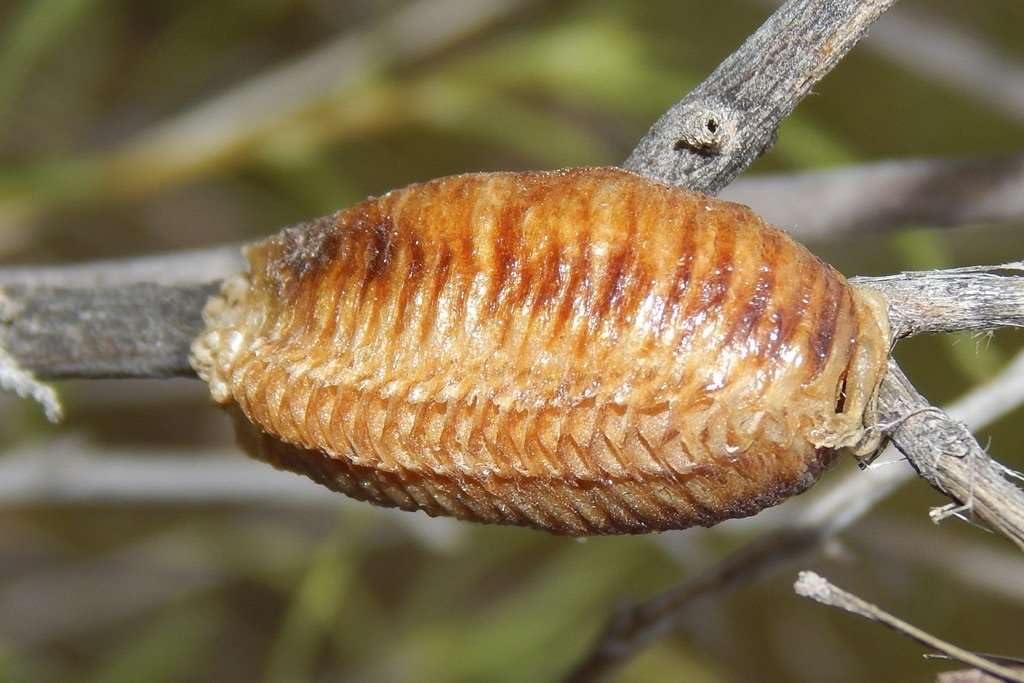
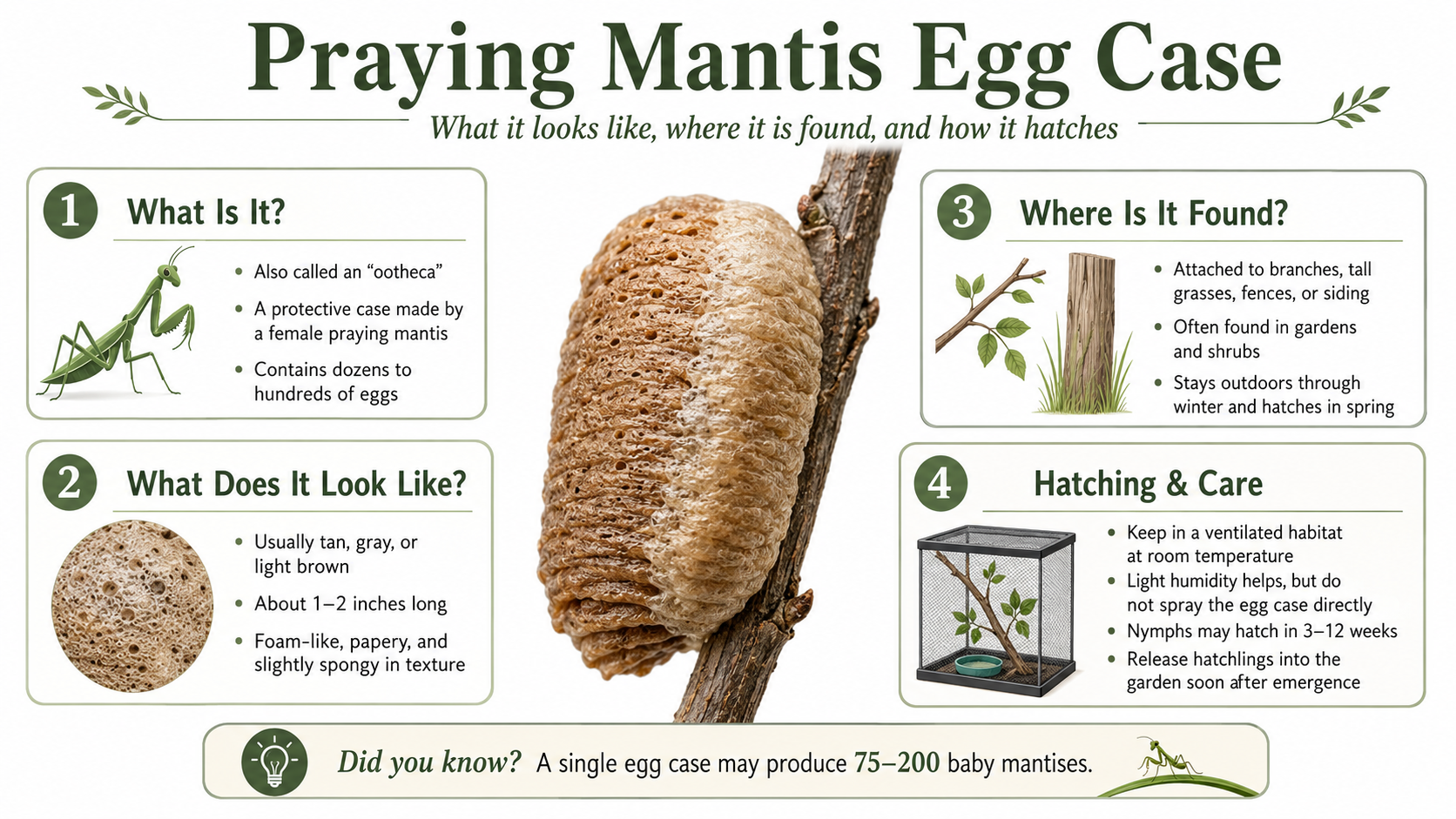
A praying mantis egg case is called an ootheca. It is a protective structure created by a female praying mantis after mating in late summer or autumn.
The female produces a frothy foam-like substance around her eggs. Within a short time, that foam hardens into a durable outer shell that protects the developing embryos throughout winter.
Inside a single ootheca, there may be anywhere from 50 to over 200 eggs depending on the species. The protective casing helps shield the eggs from cold temperatures, rain, predators, and environmental changes.
Most praying mantis species in temperate regions spend the winter in this egg stage before hatching in spring.
What Does a Praying Mantis Egg Case Look Like?
Many people walk right past a mantis egg case without noticing it.
Most praying mantis egg cases are:
- Light brown, tan, or gray
- About 1–2 inches long
- Oval or slightly elongated
- Foam-like or spongy in appearance
- Firm and papery after hardening
They are often compared to a piece of expanding foam insulation or a small blob of dried packing foam.
Some species produce flatter egg cases, while others create thicker, puffier structures. Texture and shape can vary slightly depending on the mantis species.
Where Are Praying Mantis Egg Cases Found?
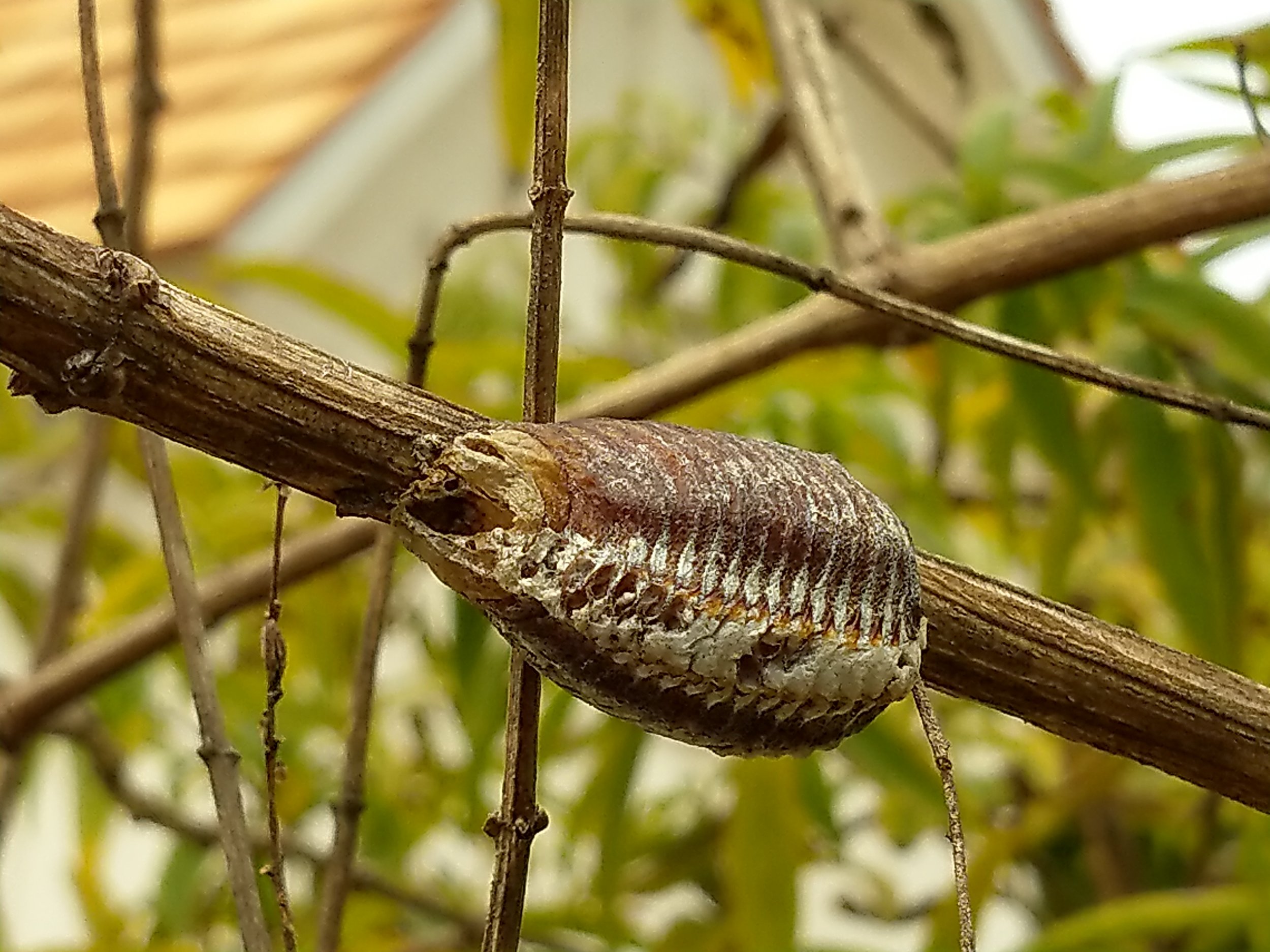
Praying mantis egg cases are usually attached to sturdy outdoor surfaces. Female mantises choose locations that offer stability and some protection from harsh weather.
Common places include:
- Tree branches
- Shrubs
- Tall grasses
- Garden stakes
- Fence posts
- House siding
- Wood piles
- Plant stems
The egg case is glued firmly into place using a natural adhesive produced by the female mantis.
In colder climates, people often notice them during winter when leaves have fallen and vegetation is sparse.
Can You Move a Praying Mantis Egg Case?
Yes — but carefully.
If an egg case is in an unsafe location, such as a frequently opened door or an area exposed to flooding or heavy disturbance, it can usually be moved gently before hatching season.
However, there are a few important things to remember:
- Avoid crushing or squeezing the ootheca
- Keep the egg case dry
- Do not expose it to intense heat
- Try to maintain the original orientation
- Attach it securely above ground level
Some insect keepers use non-toxic glue or string to secure the egg case to a branch or enclosure.
If you move it indoors for observation, room temperature conditions are generally suitable.
How to Care for a Praying Mantis Egg Case
Caring for a praying mantis egg case is relatively simple, but patience matters.
The biggest mistake people make is trying to interfere too much.
1. Place the Egg Case in a Ventilated Habitat
A mesh enclosure, insect habitat, or ventilated container works well.
The habitat should:
- Allow airflow
- Stay dry overall
- Provide climbing surfaces
- Have enough vertical space for hatchlings
Baby mantises hang from silk-like threads when emerging, so height is important.
2. Keep It at Room Temperature
Most egg cases need several weeks of warmth after winter dormancy before hatching.
Typical indoor room temperatures are sufficient. Many sources recommend temperatures around 65–75°F (18–24°C).
Avoid:
- Direct sunlight
- Heating vents
- Drafty windows
- Excessive humidity
- Freezing temperatures
3. Maintain Light Humidity
Dry conditions can make hatching difficult for developing nymphs.
A very light mist around the enclosure once a week is usually enough. Avoid spraying the egg case directly.
Too much moisture may encourage mold growth, so the enclosure should never remain constantly wet.
4. Be Patient
Praying mantis egg cases do not hatch on a strict schedule.
Depending on species and environmental conditions, hatching may occur in:
- 3–6 weeks
- 8 weeks
- Sometimes up to 12 weeks or longer
Temperature and humidity strongly influence development timing.
Sometimes it seems like nothing is happening for weeks — until suddenly the entire egg case comes alive overnight.
What Happens When the Egg Case Hatches?
This is the moment most people wait for.
When conditions are right, tiny praying mantis nymphs begin emerging from the egg case in large numbers. A single ootheca may release dozens or even hundreds of hatchlings.
The newborn mantises:
- Emerge on thin threads
- Hang briefly while their bodies harden
- Begin moving around within hours
- Resemble miniature adults
At this stage, they are extremely fragile.
Try not to:
- Touch the hatchlings
- Shake the enclosure
- Move the egg case
- Disturb the habitat unnecessarily
What Should You Do After the Baby Mantises Hatch?
Praying mantises are predators from the moment they hatch.
If crowded together too long without food, they may begin eating one another. This is normal behavior in mantises and one reason females produce so many offspring.
For most people, the best option is to release the nymphs outdoors soon after emergence.
How to Release Baby Mantises
You can:
- Place the open enclosure in a garden
- Let the nymphs crawl out naturally
- Gently encourage them onto plants and shrubs
Gardens with flowers, shrubs, and insect activity provide ideal conditions.
Praying mantises help control many common garden insects, although they are generalist predators and will eat both pests and beneficial insects.
How Long Does a Praying Mantis Egg Case Take to Hatch?
There is no exact timeline, but most hatch within several weeks after warming temperatures arrive.
Indoor egg cases commonly hatch within:
- 3–6 weeks under warm conditions
- Up to 12 weeks in cooler environments
Outdoor egg cases usually hatch naturally in spring once temperatures consistently rise.
Can a Praying Mantis Egg Case Survive Winter?
Yes — that is exactly what it is designed to do.
The hardened foam structure insulates the eggs and protects them during cold weather. Many mantis species spend the entire winter inside the ootheca before emerging in spring.
In nature, snow, rain, and fluctuating temperatures are normal parts of their life cycle.
Are Praying Mantis Egg Cases Good for Gardens?
Many gardeners enjoy having praying mantises around because they prey on various insects, including flies, moths, and some garden pests.
However, mantises are not selective hunters. They may also eat:
- Bees
- Butterflies
- Ladybugs
- Other beneficial insects
Still, many people consider them an interesting and helpful part of a balanced garden ecosystem.
FAQ About Praying Mantis Egg Cases
What is inside a praying mantis egg case?
A praying mantis egg case contains dozens or even hundreds of developing mantis embryos protected within a hardened foam structure called an ootheca.
How many baby mantises come out of one egg case?
Most egg cases contain around 50–200 hatchlings, although numbers vary by species and environmental conditions.
Can I keep a praying mantis egg case indoors?
Yes. Many people keep them indoors in ventilated habitats for observation and educational purposes.
Should I mist a praying mantis egg case?
Light humidity can help, but avoid spraying the egg case directly. Too much moisture may encourage mold growth.
How do I know if a mantis egg case already hatched?
A hatched egg case usually has rows of small openings or split areas where the nymphs emerged.
Can I buy a praying mantis egg case?
Yes. Educational insect suppliers and garden stores often sell mantis egg cases for observation or garden release.
Do praying mantises survive after hatching?
Only a small percentage survive to adulthood in nature. Predators, weather, and cannibalism naturally reduce their numbers.
Final Thoughts
A praying mantis egg case may look small and ordinary, but it contains one of the most fascinating transformations in the insect world.
Whether you found one attached to a branch in winter or ordered one for a classroom project, observing the hatching process offers a rare chance to watch an important stage of the mantis life cycle up close.
The best approach is usually the simplest: keep the egg case safe, provide stable conditions, and let nature do the rest.