
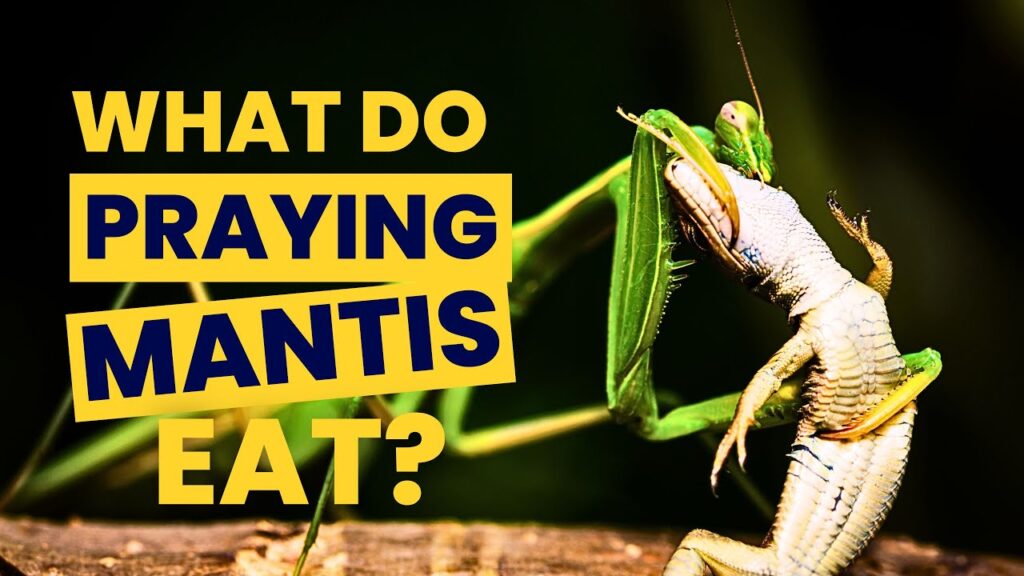
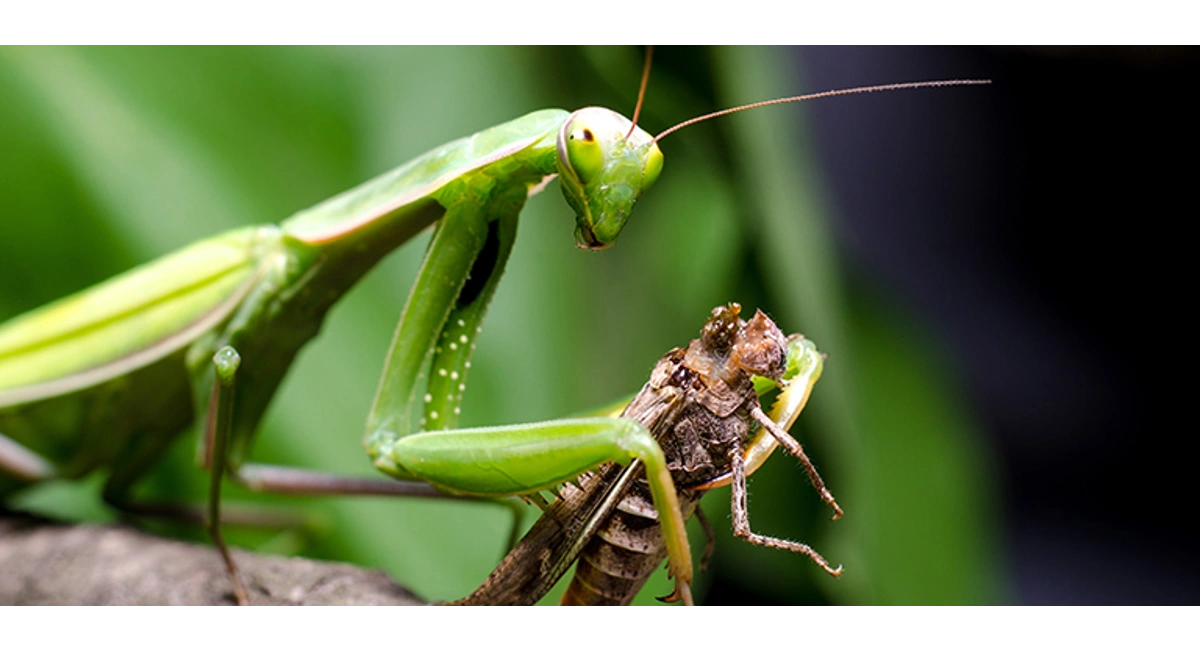
A praying mantis may look calm when it sits motionless on a leaf, forelegs folded as if in prayer. But that still posture is part of what makes it such an effective predator. Once an insect wanders too close, the mantis can strike with its spiny front legs and begin feeding almost immediately.
So, what do praying mantises eat?
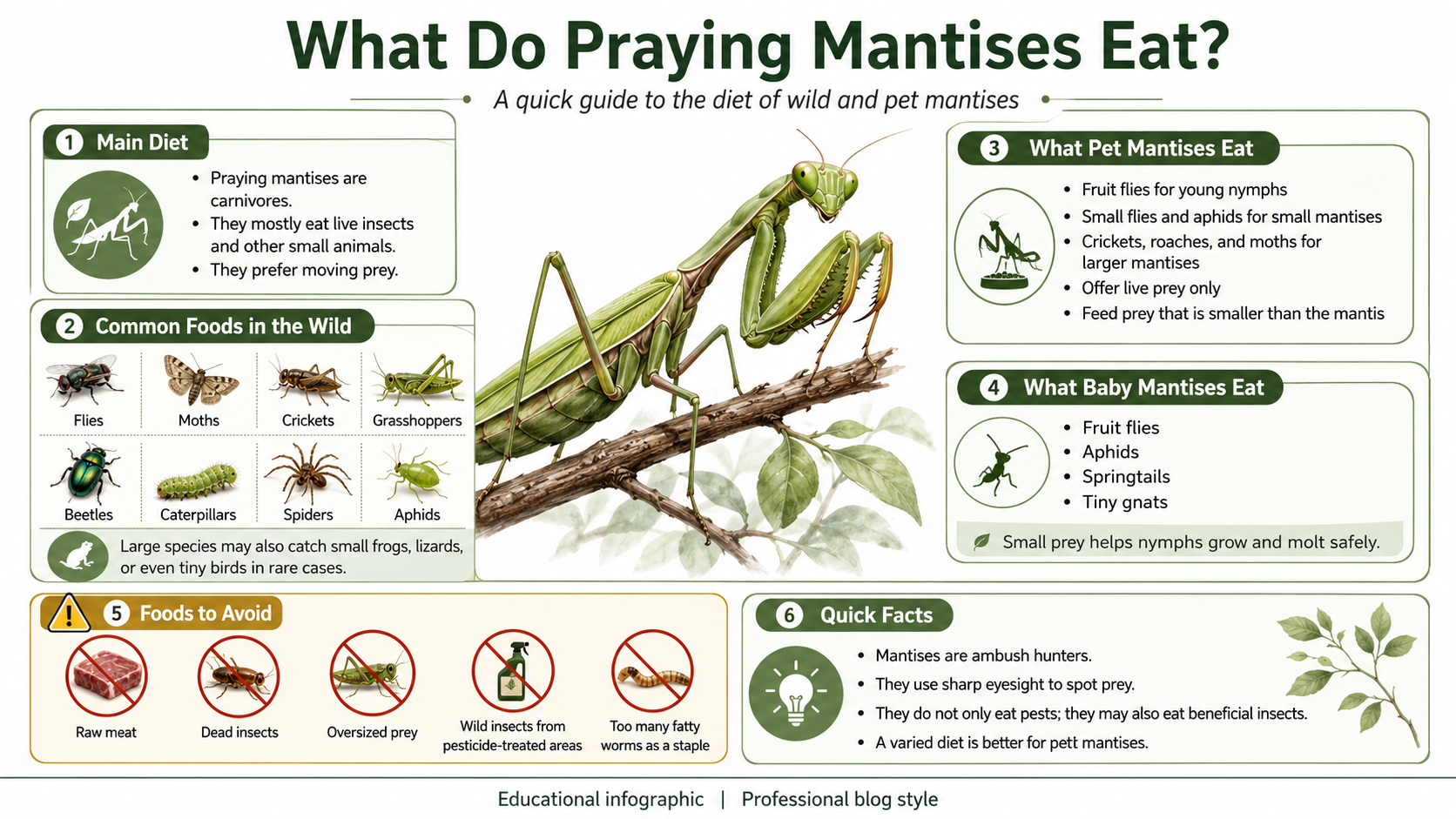
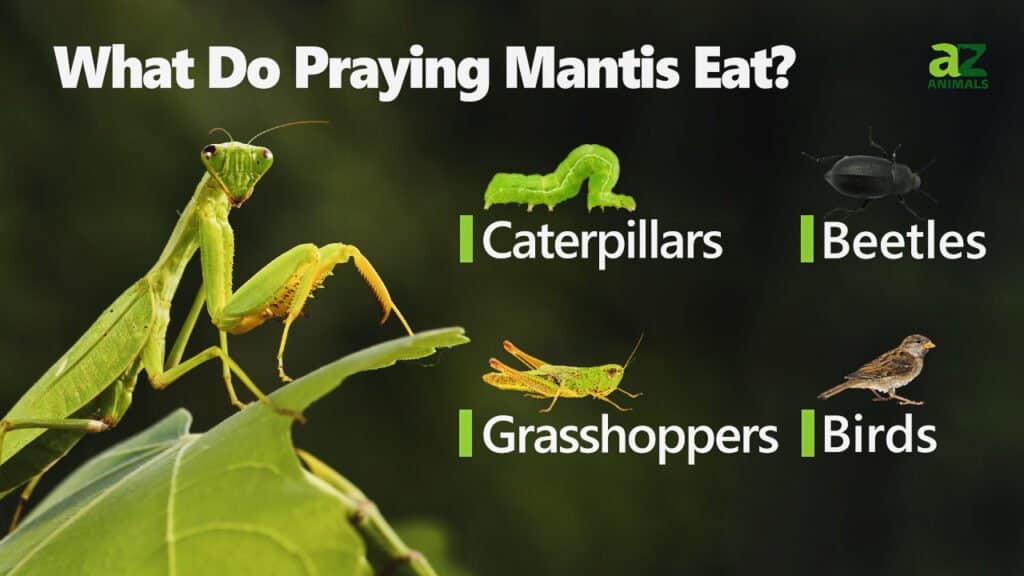
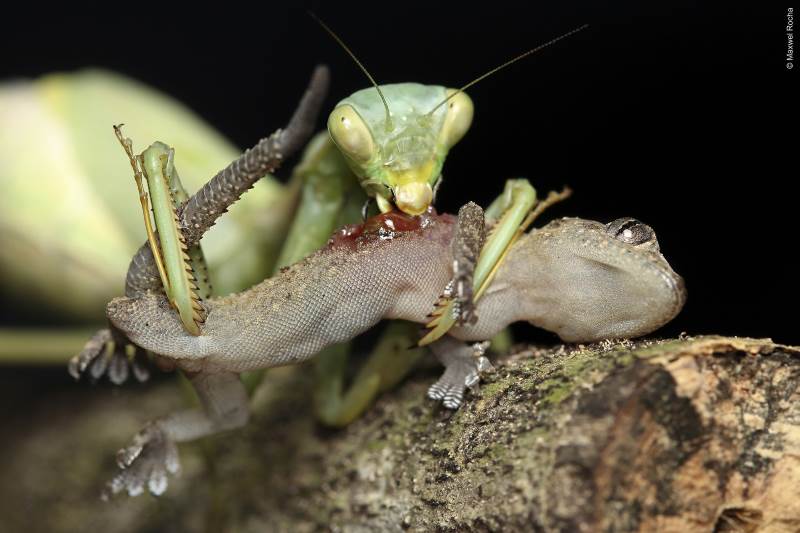
Praying mantises mostly eat live insects and other small arthropods. Flies, moths, crickets, grasshoppers, beetles, aphids, caterpillars, and spiders are all common prey. Larger mantises may also catch small frogs, lizards, and, in rare cases, small birds such as hummingbirds. They are not picky hunters; they usually eat whatever living prey they can catch and overpower. University extension sources describe mantids as predatory insects that feed on living prey such as moths, crickets, grasshoppers, flies, and other insects.
What Do Praying Mantises Eat in the Wild?
In the wild, praying mantises are generalist predators. That means they do not specialize in one single food source. Their diet depends on their size, species, habitat, season, and the prey available around them.
Common wild prey includes:
- Flies
- Moths
- Butterflies
- Crickets
- Grasshoppers
- Beetles
- Aphids
- Leafhoppers
- Caterpillars
- Spiders
- Other mantises
- Small frogs or lizards in larger species
Most of the time, insects make up the main part of a praying mantis diet. A small mantis will usually target tiny prey such as aphids, fruit flies, and small larvae. A large adult mantis can handle stronger prey such as crickets, grasshoppers, beetles, and even small vertebrates if the opportunity appears.
Large mantises are capable of catching prey that seems surprising for an insect. Research on bird predation by mantises reviewed documented cases of mantises capturing small birds, especially hummingbirds near feeders and flowering plants. This does not mean birds are a normal daily food, but it shows how powerful large mantises can be when prey comes within striking range.
Are Praying Mantises Carnivores?
Yes. Praying mantises are mainly carnivores. Their bodies are built for hunting: they have a flexible triangular head, large eyes, and raptorial front legs designed to seize prey. NC State’s entomology guide describes mantids as insects specialized for a predatory lifestyle, with long spiny front legs for catching and holding prey.
They are also opportunistic. A mantis does not ask whether an insect is a “pest” or a “beneficial” species. If it moves, fits within the mantis’s size range, and can be grabbed safely, it may become food.
That is why praying mantises are not always perfect garden pest control. They may eat aphids, flies, caterpillars, and other unwanted insects, but they may also eat bees, butterflies, lacewings, and other helpful pollinators or predators. Iowa State University and Wisconsin Horticulture both note that mantids do not distinguish between harmful and beneficial insects.
How Do Praying Mantises Hunt Their Food?
Praying mantises are mostly ambush hunters. They often wait quietly on stems, leaves, flowers, or branches, using camouflage to blend into the background. Many are green, brown, gray, or leaf-like, which helps them disappear into vegetation.
When prey moves within range, the mantis strikes with its front legs. These legs are lined with spines that help grip struggling insects. The attack is fast, precise, and difficult for small prey to escape.
Vision plays a major role in mantis hunting. Praying mantises are famous for their ability to judge distance with stereoscopic vision. A 2018 study in Current Biology found that mantis stereopsis works differently from vertebrate stereopsis and is especially useful for detecting moving targets.
This visual hunting style explains why mantises usually prefer live prey. Movement triggers their predatory response. A dead insect lying still in the enclosure is much less likely to interest them.
What Do Pet Praying Mantises Eat?
Pet praying mantises should usually be fed live insects. Good feeder insects include flies, small crickets, moths, grasshoppers, and appropriately sized roaches. South Dakota State University Extension notes that moths, flies, small crickets, and grasshoppers can be good captive prey items, while also warning not to leave too many crickets or grasshoppers alone with a mantis because they may injure it.
The most important rule is size. A feeder insect should generally be smaller than the mantis’s body and easy for it to overpower. Prey that is too large, too hard-bodied, or too aggressive can stress or injure a mantis.
A simple pet mantis feeding guide:
| Mantis Stage | Suitable Food | Notes |
|---|---|---|
| Newly hatched nymphs | Fruit flies, aphids, springtails, tiny flies | Use very small moving prey |
| Growing nymphs | Small flies, pinhead crickets, small roaches | Avoid prey larger than the mantis can handle |
| Adult mantises | Flies, crickets, roaches, moths, grasshoppers | Offer variety rather than one feeder only |
| Large adult species | Larger crickets, roaches, grasshoppers | Monitor feeding and remove uneaten prey |
A pet mantis does not need a bowl of food. It needs suitable live prey introduced into its enclosure. If the prey is not eaten within a reasonable time, remove it, especially crickets and grasshoppers.
What Do Baby Praying Mantises Eat?
Baby praying mantises, also called nymphs, eat very small live prey. They hatch tiny and delicate, so they cannot handle the same food as adults.
Good foods for baby praying mantises include:
- Fruit flies
- Aphids
- Springtails
- Tiny gnats
- Very small flies
- Pinhead crickets, if the mantis is large enough
Baby mantises grow by molting. A poor diet, dehydration, or stressful conditions can increase the risk of bad molts. For young nymphs, small prey and steady feeding are more important than large meals.
Cannibalism can also happen among young mantises, especially when they are crowded or hungry. If you are raising mantis nymphs in captivity, they should be separated once they begin feeding actively.
Do Praying Mantises Eat Plants, Fruit, or Pollen?
Praying mantises are not plant-eaters in the way caterpillars, grasshoppers, or aphids are. Their main diet is animal prey.
However, the story is a little more interesting than “mantises only eat bugs.” Research on Chinese mantids found that nymphs actively fed on pollen after hatching, and pollen feeding improved some fitness measures when combined with normal prey. The study did not show that pollen can replace live prey; it showed that pollen may act as a useful supplement in certain conditions.
For pet care, live insects should remain the foundation of the diet. Fruit, vegetables, or pollen should not be treated as a substitute for proper feeder insects.
What Foods Should You Avoid Feeding a Praying Mantis?
A praying mantis should not be fed just anything. Some foods are unsuitable, risky, or nutritionally poor as a staple.
Avoid these:
- Raw meat: It is not a natural or balanced food for mantises.
- Dead insects: Mantises usually respond best to moving prey.
- Wild-caught insects from sprayed areas: They may carry pesticides or parasites.
- Oversized prey: Large crickets, grasshoppers, or beetles may injure the mantis.
- Too many fatty larvae: Waxworms, mealworms, and similar larvae are better as occasional foods, not the whole diet.
- Only one feeder species: A varied diet is healthier than feeding the same insect every time.
For captive mantises, variety matters. Flies, crickets, roaches, moths, and other suitable insects can all be used, depending on the mantis’s size and species.
Are Praying Mantises Good for Pest Control?
Praying mantises can eat garden pests, but they are not precise pest-control tools. They may catch aphids, flies, caterpillars, beetles, and other insects that damage plants. But they may also eat bees, butterflies, and other beneficial insects.
This makes them interesting garden predators, but not a perfect biological control method. If mantises naturally appear in your garden, they can be fascinating to watch. But buying and releasing mantis egg cases is not always the best pest-control strategy, especially if the species is non-native or if your garden supports many pollinators.
Final Thoughts: What Do Praying Mantises Eat?
Praying mantises eat mostly live insects. In the wild, they hunt whatever suitable prey appears nearby, from flies and moths to grasshoppers, beetles, spiders, and sometimes even small vertebrates. As pets, they should be fed appropriately sized live insects, with variety and safety in mind.
The best way to understand a mantis diet is to remember this: a praying mantis is a visual ambush predator. It waits, watches, strikes, and eats living prey. Give it the right-sized food, avoid risky feeders, and you will be much closer to meeting its natural needs.
FAQ
What do praying mantises eat most often?
Praying mantises most often eat live insects, including flies, moths, crickets, grasshoppers, beetles, aphids, and caterpillars. Larger mantises may also eat spiders, small frogs, lizards, and occasionally small birds.
Do praying mantises eat dead bugs?
Usually, no. Praying mantises prefer live prey because movement triggers their hunting response. Some may nibble on freshly killed prey in captivity, but live insects are much more natural.
What do baby praying mantises eat?
Baby praying mantises eat tiny live prey such as fruit flies, aphids, springtails, gnats, and very small flies. Their food should be small enough for them to catch safely.
Can praying mantises eat fruit?
Fruit is not a proper staple food for a praying mantis. Mantises are mainly carnivorous and should be fed live insects. Some may take moisture from fruit, but fruit cannot replace prey.
Do praying mantises eat spiders?
Yes. A praying mantis can eat spiders if the spider is small enough to capture. However, some spiders can fight back or bite, so spiders are not always the safest feeder choice for pet mantises.
Do praying mantises eat bees and butterflies?
Yes. Mantises may eat bees, butterflies, and other pollinators. This is one reason they are considered indiscriminate predators rather than perfect garden pest-control insects.
What is the best food for a pet praying mantis?
The best food depends on the mantis’s size. Fruit flies are good for tiny nymphs, while flies, small crickets, roaches, moths, and grasshoppers can work for larger nymphs and adults.
Can a praying mantis eat a hummingbird?
Large mantises can occasionally catch hummingbirds, especially near feeders or flowering plants. This is not their everyday diet, but it has been documented in scientific reviews of mantis bird predation.