
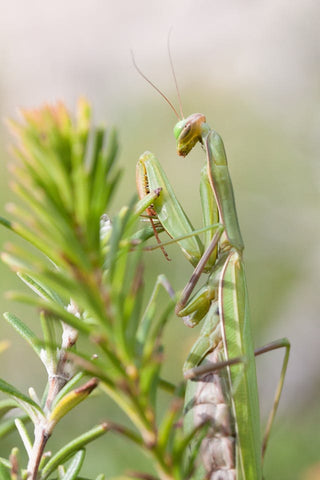
A praying mantis on a tomato plant can feel like a small sign that your garden is doing something right. It stands still among the leaves, front legs folded as if in prayer, waiting with almost perfect patience for the next insect to wander too close.
So, are praying mantises good for gardens?
The honest answer is: sometimes, but not as simply as many gardeners think.
Praying mantises can help control certain garden pests. They eat flies, beetles, caterpillars, crickets, grasshoppers, mosquitoes, and many other insects. They are fascinating predators, and they can be a welcome part of a living, chemical-free garden.
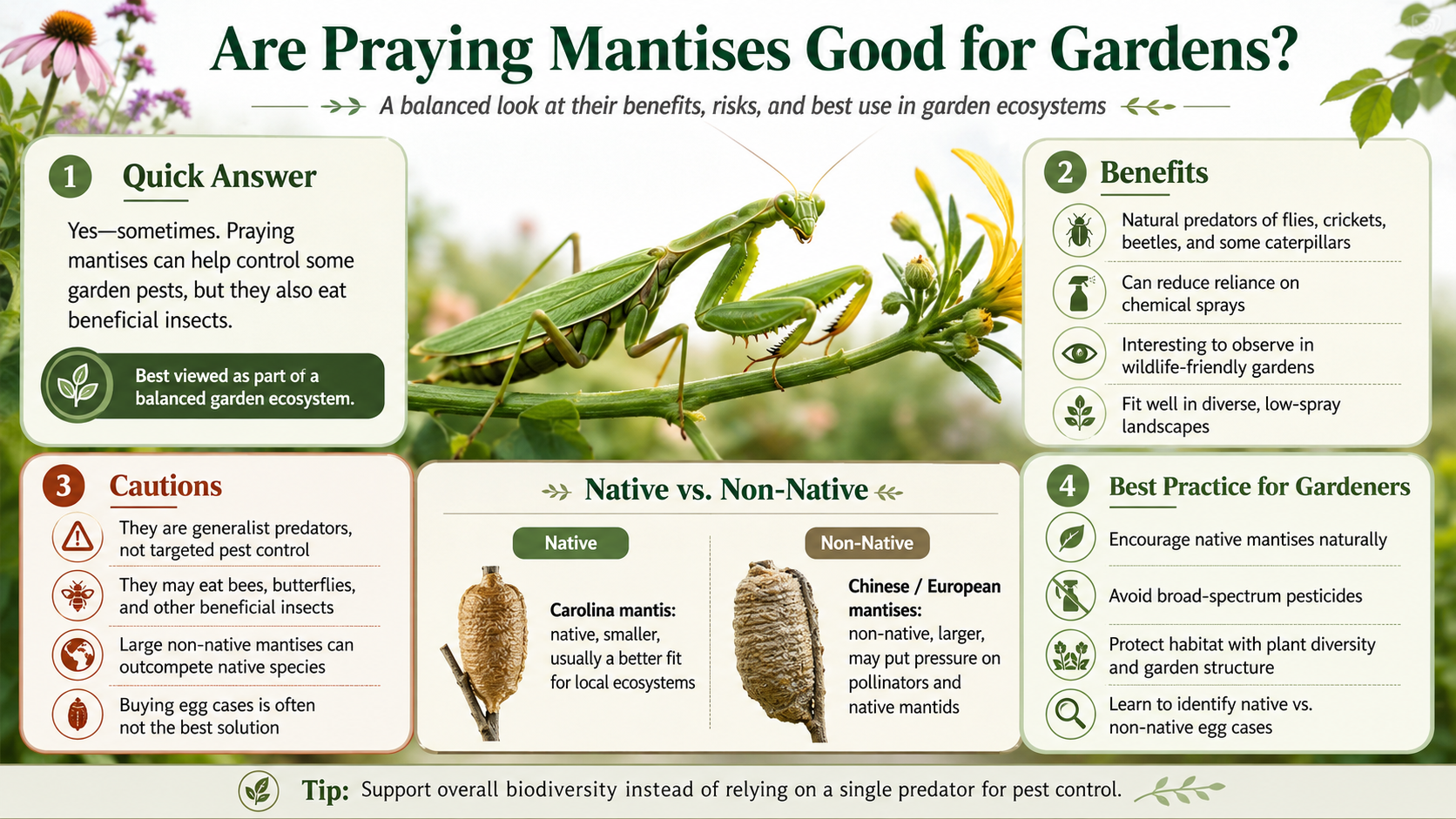
But they are not selective pest-control workers. A praying mantis does not know the difference between a harmful pest and a helpful pollinator. It may catch a cabbage worm one moment and a butterfly, bee, lacewing, or even another mantis the next. Extension sources often describe mantids as generalist predators rather than targeted biological control agents.
That makes them more complicated than the old “good bug versus bad bug” story.
Are Praying Mantises Good for Gardens or Bad for Beneficial Insects?
Praying mantises are predators, not garden guardians with a preference for pests.
They hunt by sight, staying motionless on stems, leaves, flowers, fences, or tall grasses until prey moves within striking distance. Their front legs are lined with sharp spines that help them grab and hold prey while they feed.
This hunting style makes them excellent ambush predators. It also makes them unpredictable as garden helpers.
A mantis may eat:
- Aphids
- Flies
- Mosquitoes
- Cucumber beetles
- Grasshoppers
- Crickets
- Caterpillars
- Small moths
- Other mantises
- Bees and butterflies
- Small amphibians or reptiles in the case of larger species
In other words, praying mantises can reduce some pests, but they can also reduce the insects you want to protect.
For a vegetable gardener dealing with many grasshoppers or flies, a mantis may seem helpful. For a pollinator gardener raising monarch butterflies, painted ladies, or native bees, the picture changes quickly.
The better way to think about praying mantises is this:
They are part of the garden food web, but they are not a precise pest-control solution.
The Main Benefits of Praying Mantises in the Garden
Praying mantises do offer real benefits, especially in gardens managed with fewer chemical sprays.
1. They Provide Natural Pest Control
Praying mantises eat many insects that gardeners often consider pests. If your garden has flies, small beetles, crickets, or grasshoppers, mantises may help reduce some of that pressure naturally.
They do not require traps, sprays, or special equipment. If suitable habitat exists, they may appear on their own.
2. They Support a More Natural Garden Ecosystem
A garden with praying mantises is usually a garden with enough plant structure, cover, and insect life to support predators. That is often a sign of ecological richness.
Gardens that attract predators such as mantises, lady beetles, lacewings, assassin bugs, parasitic wasps, and spiders tend to be more balanced than gardens where every insect is treated as a problem. Oklahoma State University Extension includes praying mantises among predatory insects often seen in gardens, alongside lacewings, assassin bugs, syrphid flies, and other natural enemies.
3. They Reduce the Need for Broad-Spectrum Sprays
Because mantises eat live prey, they can be one small part of a low-spray or no-spray gardening approach.
This matters because broad-spectrum insecticides often kill more than the target pest. They may harm pollinators, predators, and other beneficial insects that help the garden regulate itself.
If your goal is a more organic garden, praying mantises can belong in that system — as long as you do not expect them to solve a specific pest outbreak by themselves.
4. They Are Excellent for Observation and Education
Few insects capture attention like a praying mantis. Their triangular heads, turning necks, folded forelegs, and patient hunting behavior make them easy for children and beginners to notice.
They are useful for teaching:
- Predator-prey relationships
- Insect life cycles
- Camouflage
- Garden biodiversity
- The difference between natural balance and total pest elimination
For nature lovers, watching a mantis can be one of the quiet pleasures of gardening.
The Hidden Problem: Praying Mantises Eat Beneficial Insects Too
The biggest drawback is simple: mantises eat whatever they can catch.
A mantis waiting on a flower is not waiting only for pests. It may also catch bees, butterflies, flower flies, moths, and other pollinators visiting blooms.
The University of New Hampshire Extension notes that mantids are “not entirely beneficial insects” and may be just as likely to eat a butterfly or bumblebee as a nuisance caterpillar. It also warns that released mantids may not stay where gardeners want them or have much effect on a specific pest problem.
This is especially important if your garden is designed for:
- Monarch butterflies
- Painted lady butterflies
- Native bees
- Hummingbirds
- Pollinator habitat
- Toads, frogs, or small garden wildlife
In those gardens, large mantises can become a concern rather than a simple benefit.
Native vs. Non-Native Praying Mantises: Why Species Matters
Not all praying mantises in North American gardens have the same ecological role.
In many areas of the United States, gardeners may encounter both native and non-native mantids. Commonly discussed species include:
- Carolina mantis — Stagmomantis carolina, native to parts of North America
- Chinese mantis — Tenodera sinensis, non-native and widely established
- European mantis — Mantis religiosa, non-native and also established in many areas
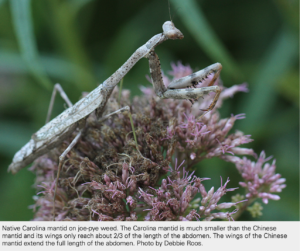
The Chinese mantis is one of the largest mantis species found in North America and may reach around five inches long. The European mantis is usually smaller, often around three to four inches. The Carolina mantis is smaller still, commonly around two inches.
This size difference matters.
Larger non-native mantids can capture larger prey, including butterflies, bees, small frogs, lizards, and in documented cases, hummingbirds. The Brandywine Conservancy notes that Chinese mantises have been known to feed on small reptiles, amphibians, and occasional small hummingbirds.
They may also prey on smaller native mantids.
That means a praying mantis in the garden is not automatically a harmless native helper. Identification matters.
Are Chinese Mantises Good for Gardens?
Chinese mantises can eat pest insects, but they are often considered problematic in many garden and habitat settings.
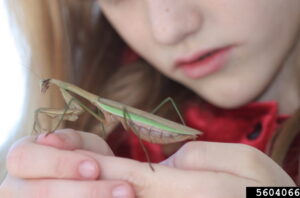
The Chinese mantis, Tenodera sinensis, is non-native in North America. It was introduced in the United States in the late 19th century and has since become widespread in many regions.
Because it is large, adaptable, and predatory, it may put pressure on native insects and smaller native mantids. North Carolina Extension has strongly challenged the idea that Chinese mantids are useful pest-control allies, emphasizing that mantids do not distinguish between pests and beneficial insects.
For gardeners who care about pollinators, native biodiversity, or butterfly habitat, encouraging Chinese mantises is usually not the best choice.
Are Carolina Mantises Better for Gardens?
The Carolina mantis, Stagmomantis carolina, is native to parts of North America and is generally smaller than the Chinese mantis.
Because of its smaller size, it tends to have less impact on larger garden wildlife than the Chinese mantis. It can still eat beneficial insects, but it is a more natural part of local ecosystems where it is native.
If you find a Carolina mantis or its egg case in its native range, it is usually best to leave it alone. Native mantids still play a predator role, but they belong to the regional food web in a way that introduced species do not.
Should You Buy Praying Mantis Egg Cases for the Garden?
In most cases, no — buying praying mantis egg cases is not recommended.
This is one of the most important points for gardeners.
Praying mantis egg cases are sometimes sold as natural pest control. The idea sounds attractive: buy an egg case, let hundreds of tiny mantises hatch, and watch them patrol the garden.
But there are several problems.
First, many commercially sold mantis egg cases may be from non-native species. Second, newly hatched mantises often disperse quickly, so they may not stay in the exact garden bed where you release them. Third, mantises are cannibalistic, meaning many young mantises may eat one another if food is scarce. Finally, they are not targeted predators, so they may eat pollinators and beneficial insects along with pests.
The University of New Hampshire Extension concludes that gardeners are probably better off saving their money and promoting native beneficial insects rather than buying mantids for release.
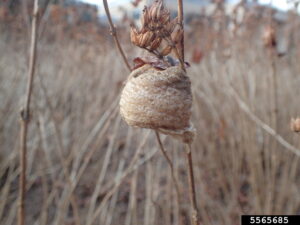
A more ecological approach is to create a garden that naturally supports local predators without importing egg cases.
How to Identify Praying Mantis Egg Cases
A praying mantis egg case is called an ootheca. It is a hardened, foamy case that protects the eggs through winter.
Female mantids usually attach oothecae to:
- Twigs
- Shrub stems
- Tall plant stalks
- Fences
- Garden stakes
- Siding
- Outdoor structures
Learning to identify oothecae can help you decide whether to leave them alone or remove them.
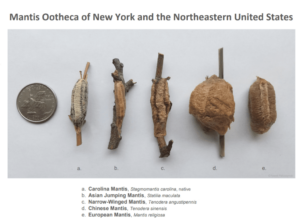
Chinese Mantis Egg Case
Chinese mantis egg cases are often described as:
- Puffy
- Round to cube-shaped
- Straw-colored or tan
- Foamy or marshmallow-like
- Attached to stems, twigs, fences, or garden structures
These are the “toasted marshmallow” egg cases many gardeners notice after leaves fall.
Carolina Mantis Egg Case
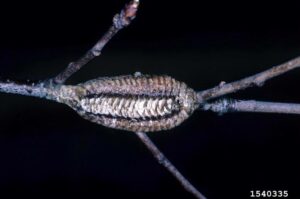
Carolina mantis egg cases are usually:
- More elongated
- Narrower and flatter
- Smoother
- Often marked with lighter and darker striping
If you live in an area where Carolina mantises are native, these egg cases are generally worth protecting.
European Mantis Egg Case
European mantis egg cases can also be elongated, but they are often paler and less distinctly striped than Carolina mantis egg cases.
Because egg case identification can be tricky, use regional extension resources or local entomology groups when possible. A quick photo search is not always enough, especially because egg cases can vary in shape and weathering.
What Should You Do If You Find a Mantis Egg Case?
The answer depends on the species and your garden goals.
If the egg case belongs to a native mantis, leave it in place. Avoid cutting down the stem or removing the structure before spring.
If it appears to be a non-native Chinese or European mantis egg case, many conservation-minded gardeners choose to remove it, especially in pollinator gardens. Some extension and master gardener resources recommend destroying invasive mantid oothecae before they hatch to reduce pressure on pollinators and native mantids.
Common removal methods include placing the egg case in a sealed bag or submerging it in water. If you are unsure, confirm identification first.
How to Attract Praying Mantises Naturally
If you want mantises as part of a balanced garden, the best method is not to buy them. It is to build a habitat where local predators can appear naturally.
Grow a Diversity of Plants
A mixed garden attracts a wider range of insects. Some of those insects become prey for mantises and other predators.
Good plant diversity may include:
- Native flowers
- Herbs such as dill and fennel
- Tall grasses
- Flowering shrubs
- Raspberry canes or brambles
- Tomatoes and other sturdy garden plants
- Late-season blooms for pollinators and prey insects
The goal is not to create a pest problem. The goal is to support a layered habitat where predators, pollinators, and prey exist in balance.
Add Height and Structure
Mantises need places to perch, hide, and hunt. Tall plants, stems, shrubs, grasses, and garden stakes give them ambush points.
A perfectly bare garden gives them fewer places to live.
Avoid Broad-Spectrum Insecticides
Chemical sprays can kill mantises directly or reduce the prey they depend on. They can also harm pollinators and other beneficial insects.
If you want a garden with natural predators, avoiding broad-spectrum insecticides is one of the most important steps.
Leave Some Wild Edges
A small untidy corner can be valuable.
Undisturbed stems, leaf litter, native grasses, and shrub edges give insects places to overwinter, rest, hide, and reproduce. This benefits not only mantises but also many other garden allies.
How to Encourage Native Mantises Without Helping Invasive Ones
This is the balance many gardeners are trying to find.
You can support native mantids and other beneficial insects by focusing on habitat rather than releases.
Try this approach:
- Do not buy mantis egg cases unless you can verify the native species and legal suitability for your area.
- Learn the difference between local native mantis egg cases and invasive mantis egg cases.
- Leave native oothecae undisturbed through winter.
- Remove likely invasive oothecae if recommended in your region.
- Plant native flowers, shrubs, and grasses.
- Avoid broad-spectrum sprays.
- Encourage many kinds of predators, not just mantises.
A healthy garden should not depend on one predator.
Lacewings, lady beetles, assassin bugs, spiders, ground beetles, parasitic wasps, tachinid flies, and birds all play roles. A diverse system is more stable than a garden overloaded with one purchased predator.
Are Praying Mantises Safe Around Butterflies and Pollinators?
Not entirely.
If you raise monarchs, painted ladies, or other butterflies, you should be careful. A praying mantis can catch adult butterflies, and larger mantids may wait near flowers where pollinators visit.
This does not mean every mantis must be removed from every garden. But if your main goal is butterfly conservation, you should avoid buying mantis egg cases and be cautious about encouraging large non-native mantids.
For a pollinator garden, the better strategy is to support a wide mix of native plants and beneficial insects while reducing pressure from invasive predators where possible.
Are Praying Mantises Good for Vegetable Gardens?
Praying mantises can be helpful in vegetable gardens, but they should not be treated as a complete pest-control plan.
They may eat insects found around:
- Tomatoes
- Basil
- Beans
- Cucumbers
- Peppers
- Herbs
- Tall flowering plants
- Garden edges
However, they do not specialize in aphids, beetles, caterpillars, or any single pest. If you have a serious aphid infestation, for example, lady beetle larvae, lacewing larvae, hoverfly larvae, and parasitic wasps may be more effective natural enemies.
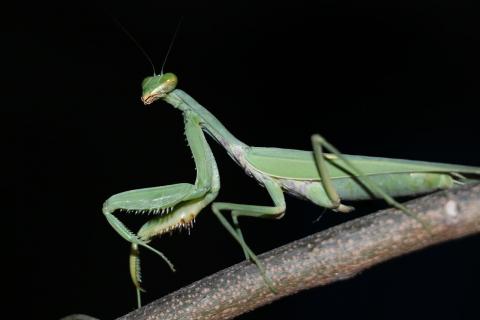
Mantises are best viewed as one part of the garden’s predator community — not the main solution.
So, Are Praying Mantises Good for Gardens?
Yes, praying mantises can be good for gardens — when they are naturally present, part of a balanced ecosystem, and not being introduced in large numbers through purchased egg cases.
But they are not perfect garden helpers.
They eat pests. They also eat pollinators. They can fascinate children and gardeners. They can also reduce butterflies, bees, and native mantids, especially when large non-native species are involved.
The best advice is simple:
Let native mantises have a place in the garden, avoid buying mantis egg cases, and focus on building a diverse habitat for many beneficial insects.
A garden does not need to be insect-free to be healthy. In fact, the healthiest gardens are usually full of life — some of it eating leaves, some of it pollinating flowers, and some of it quietly waiting in the stems with folded legs.
FAQ
Are praying mantises good for gardens?
Praying mantises can be good for gardens because they eat many insects, including some pests. However, they also eat beneficial insects such as bees, butterflies, and other predators, so they are not a targeted pest-control solution.
Do praying mantises eat bad bugs?
Yes, praying mantises eat many insects gardeners consider pests, including flies, crickets, grasshoppers, beetles, and some caterpillars. But they also eat helpful insects, so their role is mixed.
Should I buy praying mantis eggs for my garden?
In most cases, no. Purchased mantis egg cases may contain non-native species, and released mantises may not stay where you want them. They may also eat pollinators and other beneficial insects.
Are Chinese mantises bad for gardens?
Chinese mantises can eat pest insects, but they are non-native in North America and may also eat pollinators, small animals, and native mantids. Many gardeners and conservation groups recommend avoiding their release.
What is a praying mantis egg case called?
A praying mantis egg case is called an ootheca. It is a hardened, foamy case that protects the eggs until they hatch.
Should I remove praying mantis egg cases?
If the egg case belongs to a native mantis, it is usually best to leave it alone. If it belongs to a non-native invasive mantis, some regional experts recommend removing or destroying it before it hatches. Identification is important.
Do praying mantises eat butterflies?
Yes. Praying mantises can eat butterflies, including pollinator species. Larger mantids may wait near flowers and catch butterflies, bees, moths, and other insects visiting blooms.
How can I attract praying mantises naturally?
Grow a diverse garden with tall plants, native flowers, shrubs, grasses, and undisturbed edges. Avoid broad-spectrum insecticides and provide enough plant structure for hunting and egg-laying.
Are praying mantises better than ladybugs for pest control?
Not usually. Lady beetle larvae and lacewing larvae are often more useful for soft-bodied pests like aphids. Praying mantises are general predators and may eat pests or beneficial insects equally.
Are praying mantises dangerous to humans?
No. Praying mantises are not dangerous to humans. They may pinch or bite if handled roughly, but they are not venomous and are best observed without disturbing them.
Sources and References
This article was developed from source material. Additional fact-checking was supported by university extension and conservation resources, including University of New Hampshire Extension, Utah State University Extension, North Carolina Extension, Oklahoma State University Extension, Brandywine Conservancy, and Piedmont Master Gardeners.