
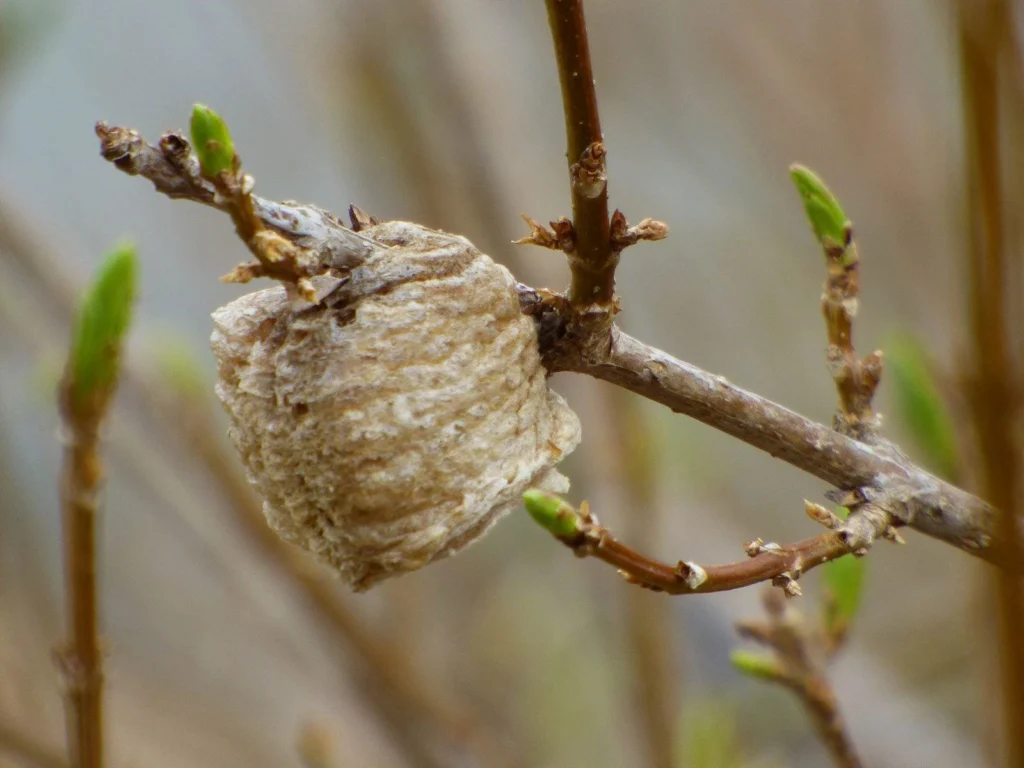
If your praying mantis egg case is not hatching, don’t assume the eggs are dead. In many cases, the egg case is simply waiting for the right season or temperature. Some mantis species need a period of winter dormancy before their eggs can finish developing.
Other possibilities include an egg case that already hatched, unfertilized eggs, damage, or parasitic wasps.
The most important question is whether your egg case was found outdoors or purchased for indoor hatching. The answer changes how long you should wait and what you should do next.
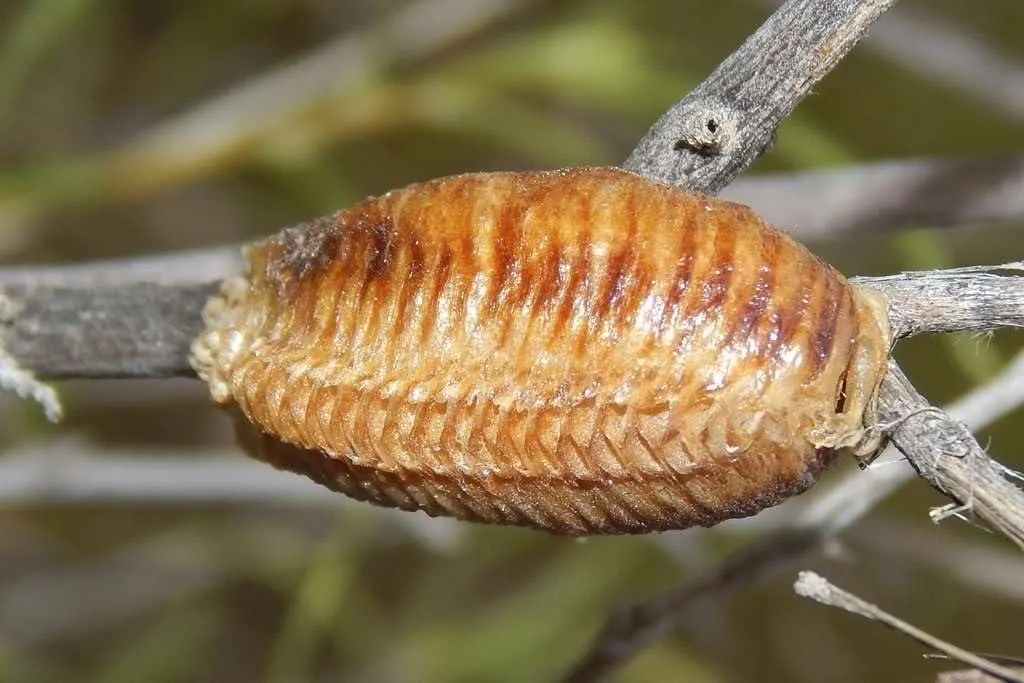
Quick Answer: Why Isn’t My Praying Mantis Egg Case Hatching?
A praying mantis egg case, called an ootheca, may fail to hatch for several reasons:
- It is still too early in the season.
- The eggs have not experienced the winter conditions required by their species.
- Temperatures are too low for development to proceed quickly.
- The egg case has already hatched.
- The eggs were not fertilized.
- Parasitic wasps have attacked some or all of the eggs.
- The egg case has been damaged or kept under unsuitable conditions.
You cannot diagnose every problem by looking at the outside. However, the season, the history of the egg case, and visible signs of emergence can help narrow down the possibilities.
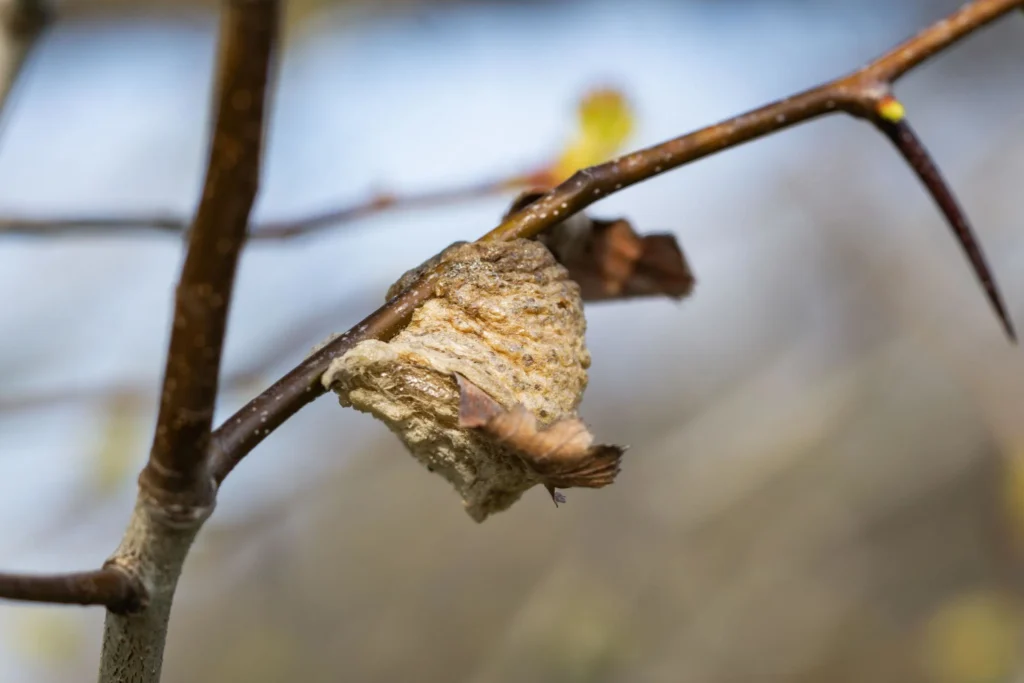
1. The Egg Case Is Still Waiting for Spring
This is one of the most common explanations for an apparently inactive egg case.
In temperate regions, many praying mantises mate and lay their eggs in late summer or fall. The eggs remain inside a protective, hardened case throughout winter.
The young usually emerge in spring, when warmer weather returns and small insects become available as food.
An egg case attached to a garden branch in October, December, or February may be behaving exactly as it should.
Hatching dates also vary by location. A mantis egg case in a warm southern region may hatch earlier than one in a colder northern climate.
What to do: If you found the egg case outdoors and it is still before the normal local hatching season, leave it undisturbed. Waiting is usually safer than trying to force it to hatch.
2. The Eggs Have Not Completed Winter Dormancy
Some temperate mantis species require a period of cold dormancy, known as diapause, before normal development resumes.
This is especially important if you collected an egg case in the fall and immediately brought it into a heated house.
Warmth does not always solve the problem. Depending on the species and developmental stage, an egg case kept warm throughout winter may fail to hatch because the necessary seasonal conditions were never completed.
However, not every praying mantis species follows the same seasonal cycle. Tropical species may develop without a cold winter period.
What to do: Identify the species if possible and find out whether it normally overwinters as eggs. If you collected a local temperate egg case, preserving its natural seasonal conditions is generally preferable to continuous indoor heating.
Do not put an unidentified egg case directly into a freezer or attempt sudden temperature changes.
Colorado State University Extension provides additional information about mantis winter dormancy and egg-case care.
3. The Temperature Is Too Low for Hatching
Even after an egg case has completed its winter dormancy, the embryos need suitable conditions to continue developing.
A sheltered outdoor location may warm more slowly than expected. Unheated rooms, garages, and enclosed porches may also remain cool for weeks after the weather begins improving.
For commercially supplied mantis egg cases that are ready for incubation, care instructions commonly recommend temperatures around 72–78°F (22–26°C).
This is not a universal requirement for every species.
If your egg case came from a supplier, check whether it has already completed its required dormancy period before applying warm-incubation guidance.
What to do: Follow the supplier’s species-specific instructions. Avoid windowsills that become extremely hot in direct sunlight, heating vents, and rapid temperature changes.
Increasing the temperature far above the recommended range will not reliably produce faster or healthier hatching.
4. The Egg Case May Have Already Hatched
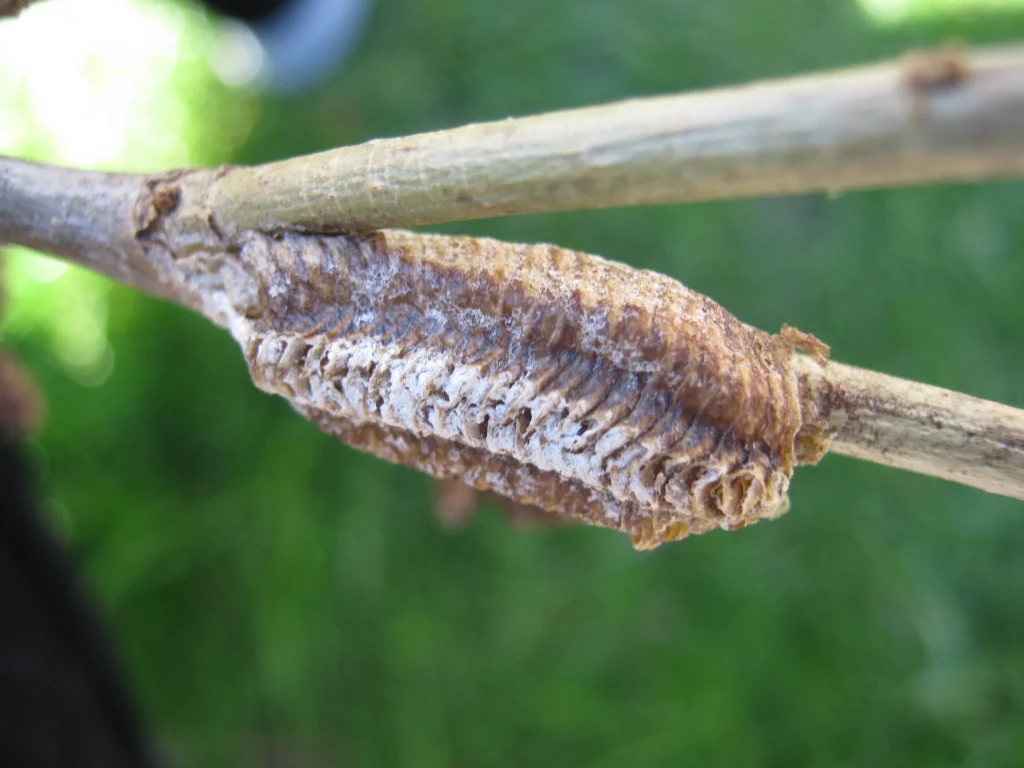
An empty egg case can look surprisingly similar to one that still contains developing eggs.
This is particularly confusing when an old ootheca remains attached to a branch, fence, or garden wall long after the young mantises have dispersed.
Look closely at the natural emergence area of the case.
In many commonly encountered mantises, the hatchlings emerge along a central seam or a series of closely arranged openings.
An unhatched case often has an intact emergence seam. An old, hatched case may show small slits or openings where the young emerged.
The exact appearance varies among species.
What to do: Examine the case from several angles without squeezing or breaking it. Compare it with photographs of hatched and unhatched egg cases from the same species.
If you are unsure what the structure should look like, our praying mantis egg case identification guide explains the basics.
5. The Eggs May Be Unfertilized
Female praying mantises can produce egg cases even when they have not successfully mated.
In species that require fertilization for normal reproduction, these egg cases will not produce viable young.
This possibility is especially relevant when a captive female laid an egg case without any known access to a male.
However, an apparently unmated female may have mated before being collected. Some mantis species also have unusual reproductive biology, so breeding history must be interpreted in the context of the species.
Unfortunately, there is no simple external color or texture test that reliably confirms whether the eggs inside are fertilized.
What to do: Review what you know about the female’s mating history, but avoid opening the case to investigate. Cutting into an ootheca can destroy eggs that may still be alive.
6. Parasitic Wasps May Have Attacked the Eggs
A praying mantis egg case can contain organisms other than developing mantises.
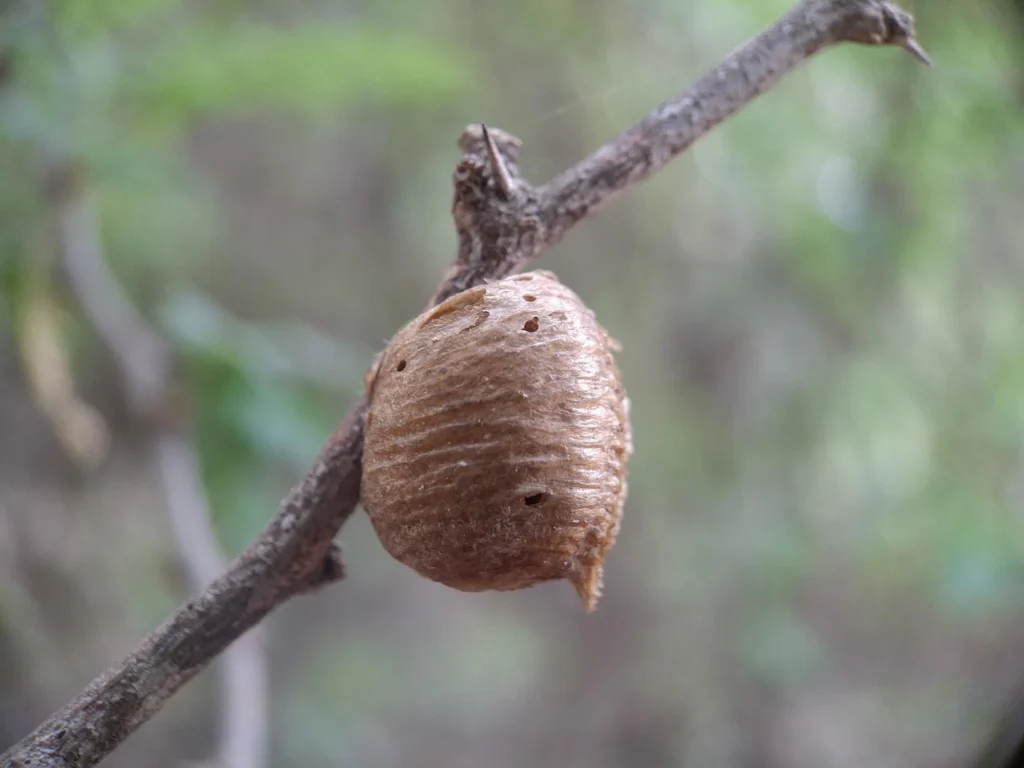
Certain tiny parasitoid wasps attack mantis eggs and develop inside them. When the adult wasps emerge, they may leave small, round exit holes on the egg case.
These holes can look different from the openings produced by normal mantis hatching.
If you see numerous small round holes scattered over the case rather than emergence openings along the normal seam, parasitism is one possible explanation.
A parasitized egg case may produce fewer mantises or none at all.
However, small surface marks alone do not prove that every egg has been lost.
What to do: Leave the case intact. Photograph the holes and compare them with identification resources from a university extension service. This can help distinguish normal hatching from parasitoid emergence.
7. The Egg Case Has Been Damaged or Kept Under Poor Conditions
A mantis ootheca is built to protect its eggs, but it is not indestructible.
Crushing, cutting, prolonged unsuitable moisture conditions, chemical exposure, or severe temperature stress can interfere with development.
For egg cases kept in containers, poor ventilation and persistent condensation may create problems. An enclosure that is continually wet can also encourage fungal growth.
At the other extreme, unsuitable dry conditions can be harmful to moisture-sensitive species.
Another issue is physical space. Newly emerging mantises often need room beneath the case to hang and free themselves from their embryonic membranes.
A case pressed against the bottom of a container may not provide adequate space for successful emergence.
What to do: Keep the egg case securely supported, with its emergence area unobstructed. For an outdoor case, leaving it in a sheltered natural position is usually best.
For a captive or purchased case, use a ventilated enclosure and follow the humidity requirements of the species. Do not soak the egg case or assume that frequent spraying is always beneficial.
If the case has fallen from its original attachment, see our guide on what to do when a praying mantis egg case falls off.
How Long Should You Wait for a Praying Mantis Egg Case to Hatch?
The answer depends on where the egg case came from.
An egg case found outdoors
For an egg case belonging to a temperate species, the seasonal cycle matters more than the number of weeks since you discovered it.
Finding a case in November and seeing no hatchlings by January is usually not a concern.
Many temperate species hatch in spring, although the exact timing depends on local weather and species.
There is no universal deadline after which every outdoor egg case should be considered dead.
A purchased egg case kept indoors
Commercial incubation instructions often provide a more useful timeline.
For example, some educational mantis suppliers report that hatching can take approximately two to eight weeks under their recommended conditions.
If a properly maintained purchased egg case has not hatched after eight weeks, the next step is to verify its temperature, humidity, species, and incubation history.
Some suppliers recommend allowing another two weeks before contacting them about a possible failed hatch.
Remember: An eight- or ten-week incubation guideline for a purchased egg case is not the same as the natural winter-to-spring timeline of an outdoor ootheca.
How to Tell if a Praying Mantis Egg Case Is Dead
There is no completely reliable way to confirm that all the eggs inside an intact ootheca are dead simply by looking at it.
Still, several observations can be useful.
Signs that do not necessarily mean the eggs are dead
A firm, brown, foam-like exterior is normal for many species. So is a complete lack of visible movement.
An ootheca is a protective structure, not a transparent egg. You should not expect to see the embryos moving inside.
A case remaining unchanged throughout winter is also normal.
Signs that deserve closer examination
A crushed or badly split case, extensive fungal growth, evidence of severe physical damage, or many parasitoid exit holes may indicate problems.
An opened emergence seam may instead mean that the mantises have already hatched.
None of these signs should be interpreted without considering the species and the time of year.
Do not shake, squeeze, puncture, or dissect a potentially viable egg case just to look for movement.
What Should You Do If Your Mantis Egg Case Still Won’t Hatch?
Start with the simplest questions.
First, check the season. If it is winter and the egg case belongs to a local temperate species, patience may be all that is required.
Second, check where the case came from. An outdoor egg case may need seasonal dormancy, whereas a commercially prepared case may already be ready to incubate.
Third, examine the surface. Look for an opened emergence seam, scattered tiny holes, or visible physical damage.
Fourth, review the conditions. If the egg case is being incubated indoors, verify that the temperature, humidity, airflow, and available emergence space are appropriate for the species.
Finally, avoid unnecessary intervention. There is no safe universal trick that guarantees an egg case will hatch. Repeated heating, cooling, soaking, or cutting may make the situation worse.
For a purchased egg case that has exceeded the supplier’s incubation period, contact the supplier before making major changes.
For an outdoor egg case that remains unopened long after the normal local hatching season, a university extension office may be able to help identify the species or interpret photographs.
What Happens If the Egg Case Finally Hatches?
When hatching begins, many young mantises may emerge within a relatively short period.
These tiny, wingless mantises are called nymphs. They need room to move, suitable moisture, and access to appropriately sized living prey if they are being raised in captivity.
Crowding can lead to cannibalism.
If the egg case was collected locally and the species is appropriate for release, outdoor conditions must be suitable before releasing the young. Do not release purchased non-native mantises without checking local ecological guidance and regulations.
If the hatching happens unexpectedly inside your home, read what to do with baby praying mantises indoors before deciding how to handle them.
Frequently Asked Questions
Why is my praying mantis egg case not hatching after 8 weeks?
If it is a purchased egg case being incubated under controlled conditions, eight weeks may still fall within the supplier’s expected range. Check the recommended temperature and humidity, and confirm whether dormancy was completed. For a naturally overwintering case, eight weeks alone tells you very little.
Can praying mantis eggs take several months to hatch?
Yes. In temperate climates, mantis eggs may remain inside their protective cases throughout winter and hatch the following spring. This is normal seasonal development, not necessarily a failed hatch.
Should I put my mantis egg case in the refrigerator?
Not without knowing the species and its required dormancy conditions. Some temperate mantises need winter chilling, but arbitrary refrigeration is not a universal remedy for an egg case that has failed to hatch.
Can a praying mantis egg case look healthy but never hatch?
Yes. An intact, normal-looking ootheca does not guarantee that the eggs inside are viable. Infertility, parasitism, or developmental failure may not be obvious from the surface.
Should I spray water on an egg case that is not hatching?
Do not soak the egg case in an attempt to trigger hatching. If it is in a captive incubation enclosure, follow the humidity instructions for the species and maintain suitable airflow. An outdoor egg case usually does not require routine spraying.
Will a praying mantis egg case hatch if it has been moved?
It may, provided the case remains intact and the environmental conditions are appropriate. If movement was necessary, secure it above the ground and leave the emergence area unobstructed. Moving an egg case does not automatically make it infertile or kill the embryos.
Final Thoughts
A praying mantis egg case that has not hatched is not necessarily a failed one.
For many outdoor egg cases, the explanation is simply that spring has not arrived or the necessary seasonal conditions have not yet been completed.
For purchased or captive egg cases, incubation history, temperature, humidity, and species requirements become more important.
The best approach is to identify what kind of egg case you have, look for evidence of previous hatching or damage, and avoid forcing the process.
Sometimes the right solution is not a change in care. It is simply more time.